Last updated November 18, 2026
How Long Does ADU Builders Take? Timelines and What to Expect
Here’s the number that surprises Enterprise homeowners most: the average Clark County building permit for a residential project currently takes 6 – 10 weeks just for plan review, before a single delivery is scheduled or a foundation poured. Most ADU builders quote you a timeline that starts at the first shovel and quietly leaves out everything the county controls. So you sign, you wait, and you have no idea who to push. This guide splits the schedule into the parts your contractor owns and the parts the county owns, so you know exactly what’s happening at every week. We’ll walk through how long it takes to build an ADU in Nevada in real, specific terms.
Quick Answer
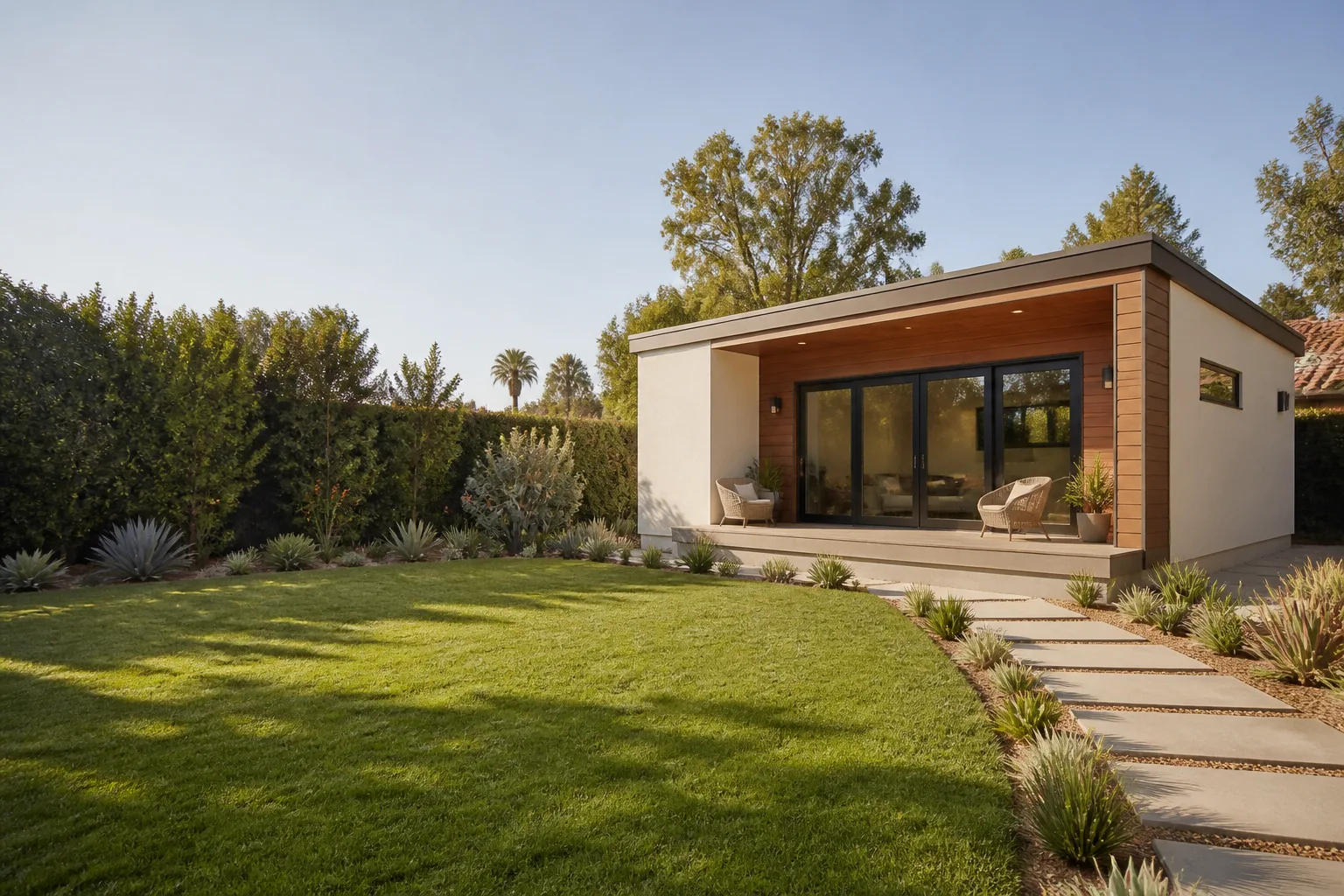
A typical ADU in Enterprise takes about 5 to 9 months from signed contract to move-in-ready, with design and permitting eating the biggest share at 6 – 14 weeks and construction running 2 to 4 months for a prefab unit. Prefab models can shave several weeks by moving framing into a factory, but they still wait in the same county permit line and the same NV Energy interconnection queue as a stick-built unit. Site-built ADUs generally land at the longer end because framing happens outdoors on a schedule the weather can interrupt.
Table of Contents
- The Real Phase-by-Phase ADU Timeline
- The Part of the Clock You Don’t Own: Permitting and Plan Check
- Prefab vs. Stick-Built: Where Factory Construction Actually Saves Weeks
- Clark County Delays Nobody Warns You About
- What a Real Project Schedule Looks Like
- The Five Owner Decisions That Stretch a Timeline
- Common Mistakes to Avoid
- Frequently Asked Questions
The Real Phase-by-Phase ADU Timeline
Here’s how an ADU project actually breaks down in time. Each phase has a range because no two lots in Enterprise are identical. A flat corner lot with easy utility access moves faster than a sloped lot that needs retaining work.
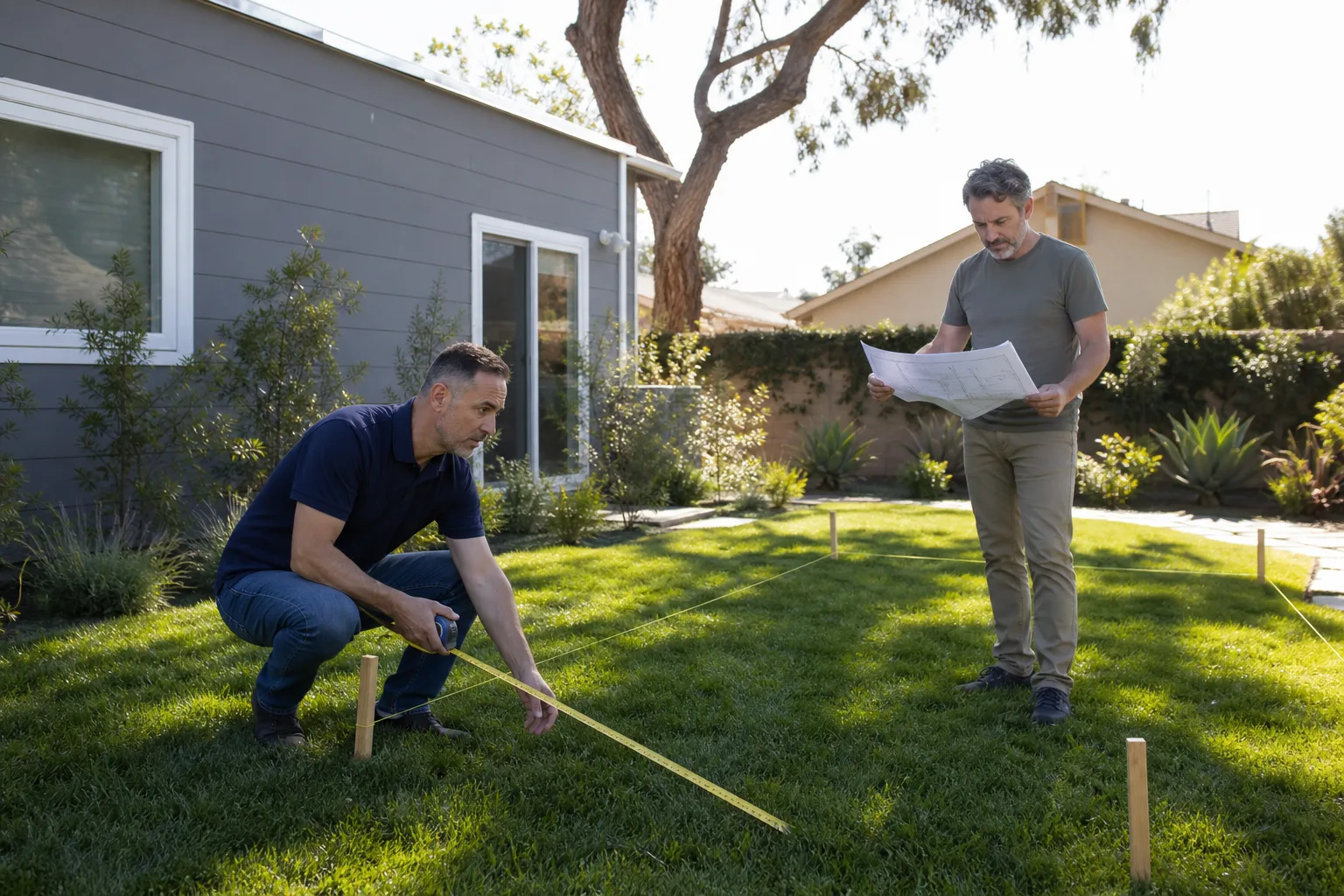
- Design and permitting (6 – 14 weeks). You pick a design, we prepare construction drawings, and the county runs plan review. Owner decisions and design revisions push this toward the long end.
- Site prep and foundation (2 – 4 weeks). Grading, trenching for utilities, and pouring the slab or stem walls. Concrete cure time is weather-dependent, and summer heat in Enterprise matters here.
- Framing or prefab delivery (2 – 6 weeks). Stick-built framing goes up on site; a prefab unit like a Plant Prefab module arrives largely assembled and gets set by crane in a day or two.
- MEP and inspections (3 – 6 weeks). Mechanical, electrical, and plumbing rough-in, then framing and rough inspections. This phase is inspection-scheduling dependent, which we explain below.
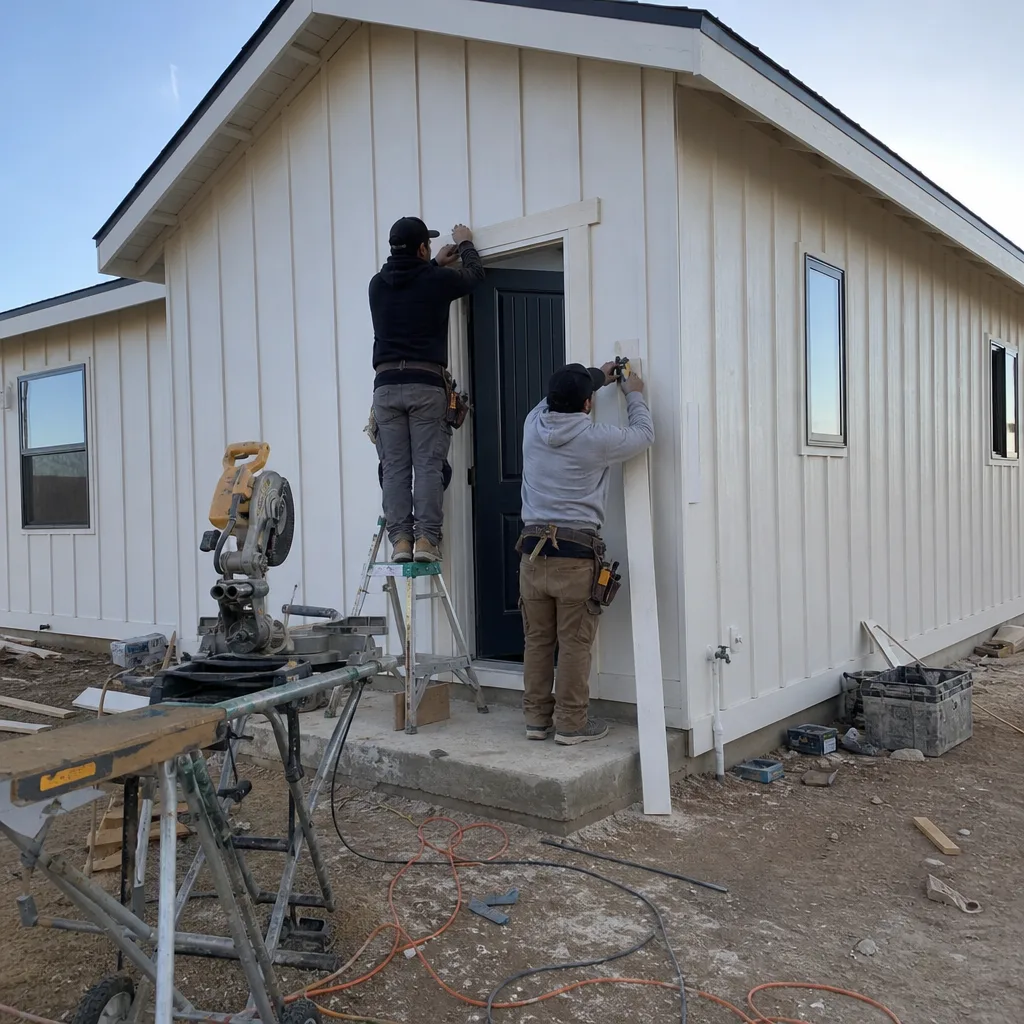
- Finish work (2 – 4 weeks). Drywall, flooring, cabinets, fixtures, paint, and final inspection. Then utility connections get signed off.
Total for a straightforward build: roughly 20 to 30 weeks. That’s the honest range. Anyone quoting you a flat “8 weeks, guaranteed” is either leaving out permitting or counting only construction.
The Part of the Clock You Don’t Own: Permitting and Plan Check
Plan review is where ADU timelines quietly balloon, and it’s the part your builder can influence but not command. In Clark County, a residential permit can sit in plan check for 6 – 10 weeks. If the reviewer comes back with comments (a setback that doesn’t meet code, a stair dimension, an egress window calculation), you go back in the queue for a resubmittal. Each cycle adds time.
Setback, in plain English, is the required distance between your ADU and the property line. It’s one of the most common comment items because lot sizes in Enterprise vary widely. Your builder’s job is to catch those issues in the drawing phase so the county doesn’t catch them later. A clean submittal saves a full review cycle.
The second county-owned clock is utility coordination. Before the unit can go live, NV Energy has to review and approve the electrical connection. During busy periods that interconnection review carries its own queue. Your ADU builder can prepare a complete, accurate service request so it doesn’t bounce back, but nobody can move NV Energy faster by asking. Understanding which delays are the contractor’s and which are the utility’s tells you where to direct a firm, polite follow-up.
Prefab vs. Stick-Built: Where Factory Construction Actually Saves Weeks
Homeowners hear “prefab” and assume the timeline shrinks everywhere. It doesn’t. Factory building moves the work indoors where rain, wind, and the summer heat can’t stop it, and that’s a genuine advantage for the framing phase. A prefab unit from a brand like Plant Prefab or Boxabl gets built in a controlled facility while your foundation is being poured. Those two tracks can run at the same time, which a stick-built project cannot do.
Where prefab doesn’t save time: permitting and utility connection. The county still reviews the plans, still inspects on site, and NV Energy still has to approve the connection. That queue is identical whether the walls were framed under a roof in a factory or in your backyard.
- Factory-built saves: framing weeks, weather downtime, and some material delivery coordination.
- Factory-built doesn’t save: plan review, utility interconnection, and final inspection scheduling.
- Stick-built can be faster if: the design is simple, the drawings are clean, and the lot is easy – there’s nothing to ship or set by crane.
We build with several leading prefab brands, including Tuff Shed for certain structures and James Hardie cladding for durability, so the choice is about your site, your budget, and your move-in date, not about which one is universally “faster.”
Clark County Delays Nobody Warns You About
A few local factors stretch ADU schedules in Enterprise and the surrounding area in ways a national timeline never mentions. Seeing them coming is half the battle.
Plan check cycles. As covered above, each resubmittal adds weeks. Accurate drawings that pre-solve code issues are the single biggest lever a builder controls.
NV Energy interconnection. The utility review and connection for your new service is outside the builder’s control. We submit complete, correct requests and then track them, but the queue is the queue.
Monsoon season and concrete. The summer monsoon can dump rain fast, and a slab can’t cure properly if it’s flooded or poured in extreme heat without care. We schedule site prep and pours around the forecast because pouring during a monsoon window risks a cracked or weak foundation you’ll pay to fix later.
Inspection scheduling. The county has to physically inspect at each phase. When inspection calendars get tight, the gap between finishing rough-in and getting it signed off adds days that stack up. Real-time tracking matters most here, because slippage at inspection is where a schedule compounds.
If you want the bigger picture of what ADU construction involves locally, our guide to ADU builders in Enterprise walks through the full scope.
What a Real Project Schedule Looks Like
A real schedule is a living document with milestones, dependencies, and dates you can actually watch. Not a one-page “estimated completion” line. Here’s the structure we build around, and what you should expect from any ADU builder:
- Milestones with dates. Design complete, permit submitted, permit issued, foundation poured, unit delivered, rough inspection passed, final inspection scheduled, utilities connected. Each is a checkpoint you can confirm.
- Dependencies mapped. The foundation can’t pour until the permit is issued. The unit can’t deliver until the foundation cures. The connection can’t happen until NV Energy approves. When you see the arrows between steps, you understand why one county delay pushes everything back.
- Owner decision deadlines. The schedule shows the last date to lock a material or finish before it delays the next phase. That deadline protects you from a change order spiraling into a month’s delay.
- Real-time tracking. A proper system shows slippage the day it happens, before it compounds into a missed move-in date. That’s what our Relay Visibility Guarantee is built around: a written price before work starts and a schedule you can see.
If you’re comparing ADU timelines against a larger remodel, the same scheduling logic applies – our home addition contractor in Enterprise page lays out how additions schedule out.
The Five Owner Decisions That Most Commonly Extend Timelines
Not every delay comes from the county. In our experience, the majority of stretches homeowners feel are self-inflicted or avoidable, and they almost always trace back to five decisions. Knowing them ahead of time is the cheapest schedule protection there is.
- Material change orders mid-build. Swapping a finish after framing starts freezes that phase, triggers a new order, and often a new inspection. Lock finishes before demo or delivery.
- Slow HOA approvals. Some Enterprise communities require architectural review for an ADU. Start that paperwork the same week you start design, because an HOA can sit on a packet for weeks.
- Financing delays. Construction loans and draw schedules have their own approval clock. Get pre-approval lined up before you’re ready to pour, not after.
- Design revisions after submittal. Changing the plan once it’s in county review means resubmitting – back of the line. Nail the design before the packet goes in.
- Permit address errors. A wrong parcel number or a mismatched address on the application can stall the whole submittal. It’s a clerical error with a real time cost, and it’s entirely preventable.
We put the plan and the price in writing from the first conversation specifically so these decisions have deadlines attached and don’t surprise you in month three.
Common Mistakes to Avoid
- Believing a “construction-only” timeline. A builder quoting 8 weeks is often describing only the build, not permitting. Always ask whether their number starts at permit issued or at contract signed.
- Ignoring the NV Energy queue. Homeowners plan move-in around the last inspection and forget the utility connection has its own wait. Build utility approval into your move-in date, not after it.
- Scheduling a concrete pour mid-monsoon without a weather plan. A rushed pour in a monsoon window risks a foundation you’ll pay to fix. We schedule around the forecast; expect that as a feature, not a delay.
- Skipping HOA review until the end. Some Enterprise neighborhoods require architectural approval for an ADU. Waiting until the build is underway can stall everything.
- Choosing finishes after the build starts. Late material decisions are the number-one avoidable delay we see. Choose fixtures before foundation.
- Assuming prefab means faster everywhere. Factory time helps framing, not permitting or interconnection. Judge a prefab timeline by its full end-to-end schedule, not its assembly speed.
- Not getting the price in writing. A verbal estimate that shifts later destroys your budget. Insist on a written price before work begins.
When to Call a Professional
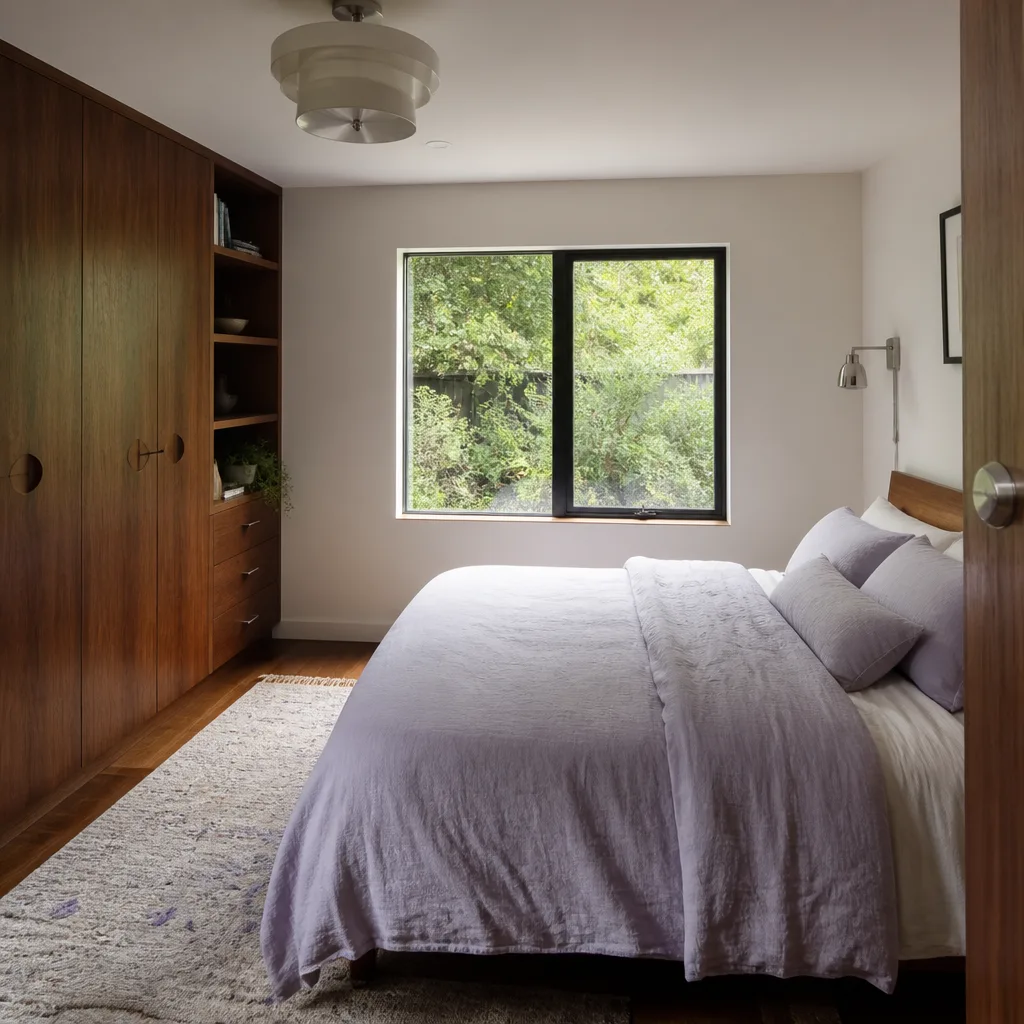
An ADU is one of the few projects where the timeline risk sits in places you can’t see: plan check cycles, utility queues, and inspection calendars. That’s exactly where an experienced ADU builder earns their keep. If your lot has a tricky setback, if you’re weighing prefab versus stick-built, or if you need a written schedule and a written price you can actually hold someone to, it’s time to bring in a pro. Tackling permit drawings yourself often means multiple resubmittals and months lost. Benson ADU Builders Enterprise offers free estimates in Enterprise – call (844) 980-0541 to get a written price and a real schedule before anything starts. Our technicians have up to 20 years of experience, and every project is backed by our 365-Day Done Right Promise.
Frequently Asked Questions
Most ADUs in Nevada take about 5 to 9 months from signed contract to move-in-ready, with permitting and design often consuming 6 – 14 weeks before construction even begins. Construction itself runs 2 to 4 months for a straightforward build. Call (844) 980-0541 for a schedule built around your specific lot.
Prefab can be faster because framing happens in a factory while your foundation is poured, saving weather downtime and several weeks of on-site work. But prefab still waits in the same Clark County plan review and NV Energy interconnection queues, so it doesn’t speed up the county-owned parts of the timeline. Call (844) 980-0541 for a side-by-side estimate.
A residential permit in Clark County can take 6 – 10 weeks in plan review, and each resubmittal after a comment cycle adds more time. A clean, accurate submittal is the best way to stay on the short end, which is why we pre-solve code issues in the drawings before they go in. Call (844) 980-0541 to talk through your project.
The biggest avoidable delays are material change orders after work starts, slow HOA approvals, and late financing. On the county side, plan check resubmittals, NV Energy interconnection queues, and inspection scheduling are the usual culprits. We track all of these on a live schedule so you see slippage before it compounds.
Our written price comes before any work begins, so you’re not handed a verbal estimate that shifts at the door. Scope changes you request mid-build are the one thing that alters price, which is why we help you lock finishes before foundation. Call (844) 980-0541 for a written, line-item estimate.
A real schedule lists milestones with dates (permit issued, foundation poured, unit delivered, inspections passed), shows the dependencies between them, and flags your decision deadlines. That’s the format we use, backed by real-time tracking through the Relay Visibility Guarantee. Call (844) 980-0541 to see a sample schedule.
The Bottom Line
An ADU in Enterprise takes roughly 5 to 9 months end to end, and the difference between the fast and slow versions almost always lives in the parts you can plan around: clean permit drawings, early HOA and financing prep, locked finishes, and a realistic read on the NV Energy queue. Prefab helps with framing and weather, but nobody skips the county’s clock. The homeowners who stay calm are the ones who can see their schedule and their price in writing, with a live view of slippage before it becomes a crisis. Get the plan documented, get the price fixed, and then let the schedule do its job.
Ready to see a real timeline and a written price for your Enterprise ADU? Call Benson ADU Builders Enterprise at (844) 980-0541 for a free estimate. Every project comes with a written price before work starts, background-checked and uniformed technicians, a live person on the phone around the clock, and our 365-Day Done Right Promise. Learn more about our room addition contractor in Enterprise work, or start with our Benson ADU Builders Enterprise home page.
Written by the team at Benson ADU Builders Enterprise.