Last updated November 18, 2026
The Complete ADU Builders Guide for Enterprise Homeowners
Enterprise, NV sits inside Clark County’s unincorporated jurisdiction, which means its ADU rules differ from Las Vegas proper, and most online guides get that wrong from paragraph one. Homeowners here file with Clark County, not the city, and the setbacks, lot coverage math, and owner-occupancy requirements that apply to a Las Vegas address can be different for a home off Warm Springs or Eastern Avenue. This guide walks through the whole build: jurisdiction and permits, current setback and coverage rules, real Las Vegas Valley cost ranges for stick-built and prefab, the utility hookups that surprise people, and the written-contract checklist you want in hand before a shovel turns. If you’d rather start with who does the work, our ADU Builders in Enterprise page covers that side.
Quick Answer
Building an ADU in Enterprise typically runs $120,000 to $300,000+ depending on whether you go stick-built or prefab and how much utility work your lot needs, and the permit is filed with Clark County because Enterprise is unincorporated. The two biggest cost variables are your setback and lot coverage limits under county code and whether your electrical panel, sewer lateral, or water line needs upgrading to carry a second dwelling. Get those answered on paper before you sign a builder agreement, and the rest of the budget stops moving.
Table of Contents
- Clark County vs. City of Las Vegas: Who Approves Your ADU?
- Setback, Lot Coverage, and Owner-Occupancy Rules
- What ADUs Actually Cost in the Las Vegas Valley
- Prefab vs. Stick-Built: Which Fits Your Enterprise Lot?
- The Utility Hookup Costs That Surprise Homeowners
- The Written-Contract Checklist
- How Long an Enterprise ADU Takes
- Rental Income and HOA Rules to Check First
Clark County vs. City of Las Vegas: Who Approves Your ADU?
This is the single most common place Enterprise homeowners lose a month of time. Most properties in Enterprise fall under Clark County’s unincorporated jurisdiction, so your ADU permit goes to Clark County’s building department, not the City of Las Vegas. Call the wrong office and you’ll be told to start over. The address itself decides it, not the mailing address, and a parcel map or the county’s own address tool settles the question in minutes.
Here’s how to confirm your jurisdiction before you spend a dollar on design:
- Look up your parcel on the Clark County Assessor’s map using your street address.
- Check whether the parcel is inside Las Vegas city limits or in unincorporated Clark County. Most of Enterprise is unincorporated.
- Confirm zoning designation, because the ADU allowances attach to the zone, not the neighborhood name.
- Pull any recorded CC&Rs for your subdivision, since HOA and deed restrictions can restrict an ADU even where county code allows it.
- Get the answer in writing from the county before your designer finishes the plans.
Unincorporated parcels in Enterprise often have larger lots than comparable Las Vegas city lots, which is good news for placement. The flip side is that county review runs on its own schedule and its own checklist. A builder who files in Enterprise every month knows which submittal items get kicked back and which pass on the first round. That’s the practical difference between a five-month build and an eight-month one.
Setback, Lot Coverage, and Owner-Occupancy Rules
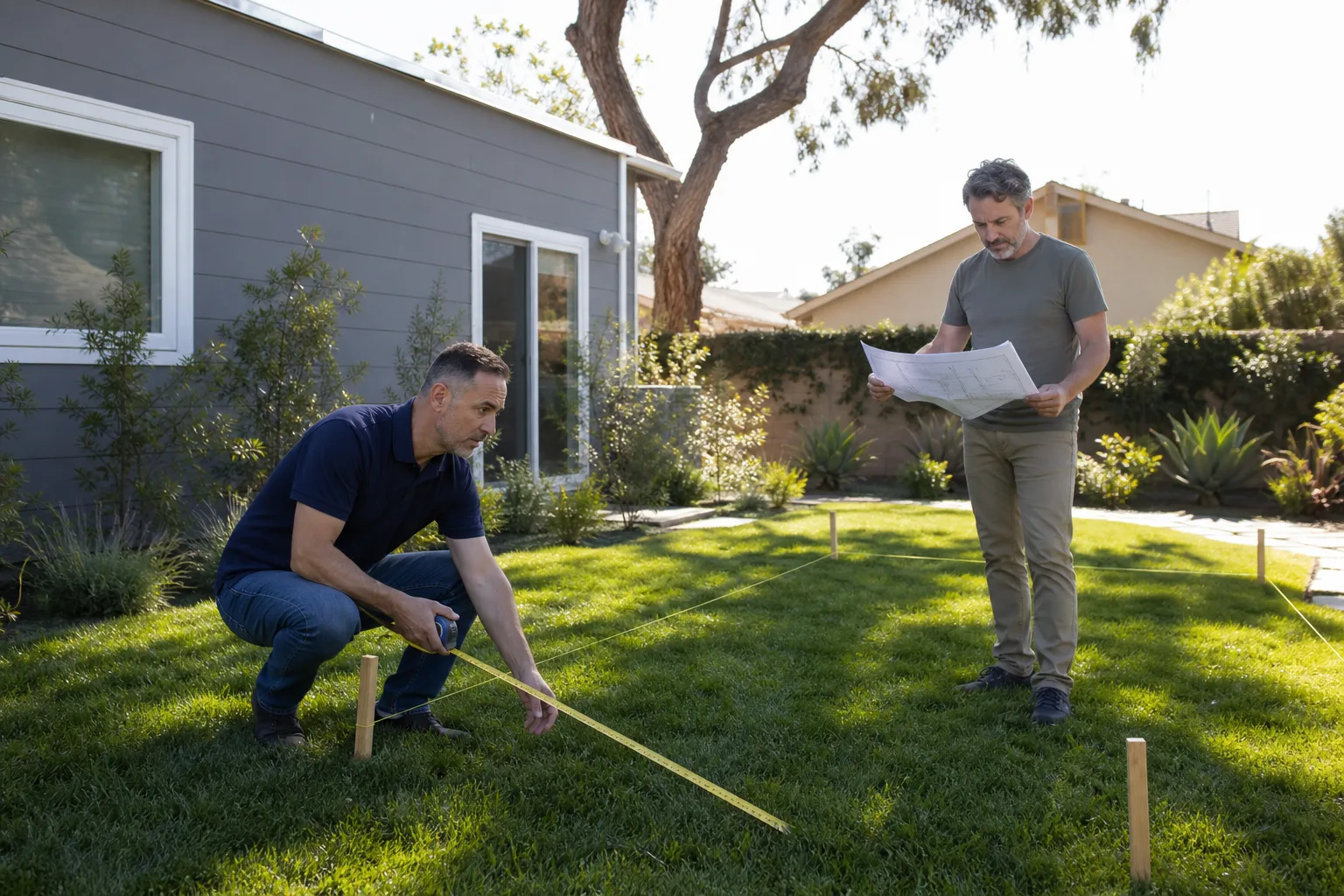
County code controls how big your ADU can be and where it can sit, and both numbers get checked against your specific lot, not a generic template. Setbacks are the minimum distance from the ADU to your property lines. Lot coverage is the percentage of your lot that can be covered by buildings and, in some cases, hardscape. A 7,000-square-foot Enterprise lot with a big pool, patio cover, and detached garage may have far less buildable area than the homeowner expects.
What to gather before you talk to anyone about design:
- Your lot dimensions and property line locations from a survey or the assessor’s map, since fence lines are frequently not the true property line.
- Existing coverage from the main house, garage, covered patio, and any sheds. Every square foot counts toward your limit.
- The setback standards for your specific zone, which differ for a detached ADU versus an attached one and versus a garage conversion.
- Owner-occupancy rules, which apply in some circumstances and not others. Confirm the current requirement in writing for your parcel rather than relying on a forum post from three years ago.
- Height and second-story limits, which matter more than most people realize on smaller lots.
We’ve watched homeowners buy plans online for a 900-square-foot detached unit, then learn their lot supports a 600-square-foot attached one. Measure first, design second. A garage conversion is often the fastest path in Enterprise because it reuses an existing footprint and existing setbacks, and it sidesteps most of the coverage math entirely.
What ADUs Actually Cost in the Las Vegas Valley
Real numbers beat vague ranges, so here’s what Enterprise homeowners are actually spending across the Las Vegas Valley. These ranges cover design, permits, construction, and standard finishes, but not the utility surprises below.
| Line Item | Typical Range | Notes |
|---|---|---|
| Design and engineering | $8,000 – $18,000 | Site plan, structural, title 24 energy if applicable |
| County permit and plan check fees | $4,000 – $12,000 | Scales with square footage and valuation |
| Site work, grading, foundation | $15,000 – $40,000 | Higher on lots with slope or rock |
| Stick-built construction (600 – 1,000 sq ft) | $150,000 – $280,000 | Standard finishes, single story |
| Prefab unit (delivered and set) | $120,000 – $230,000 | Varies widely by brand and size |
| Utility hookups and panel upgrade | $8,000 – $35,000 | The wildcard, explained below |
| Landscaping and final touches | $5,000 – $20,000 | Including shade and cooling measures |
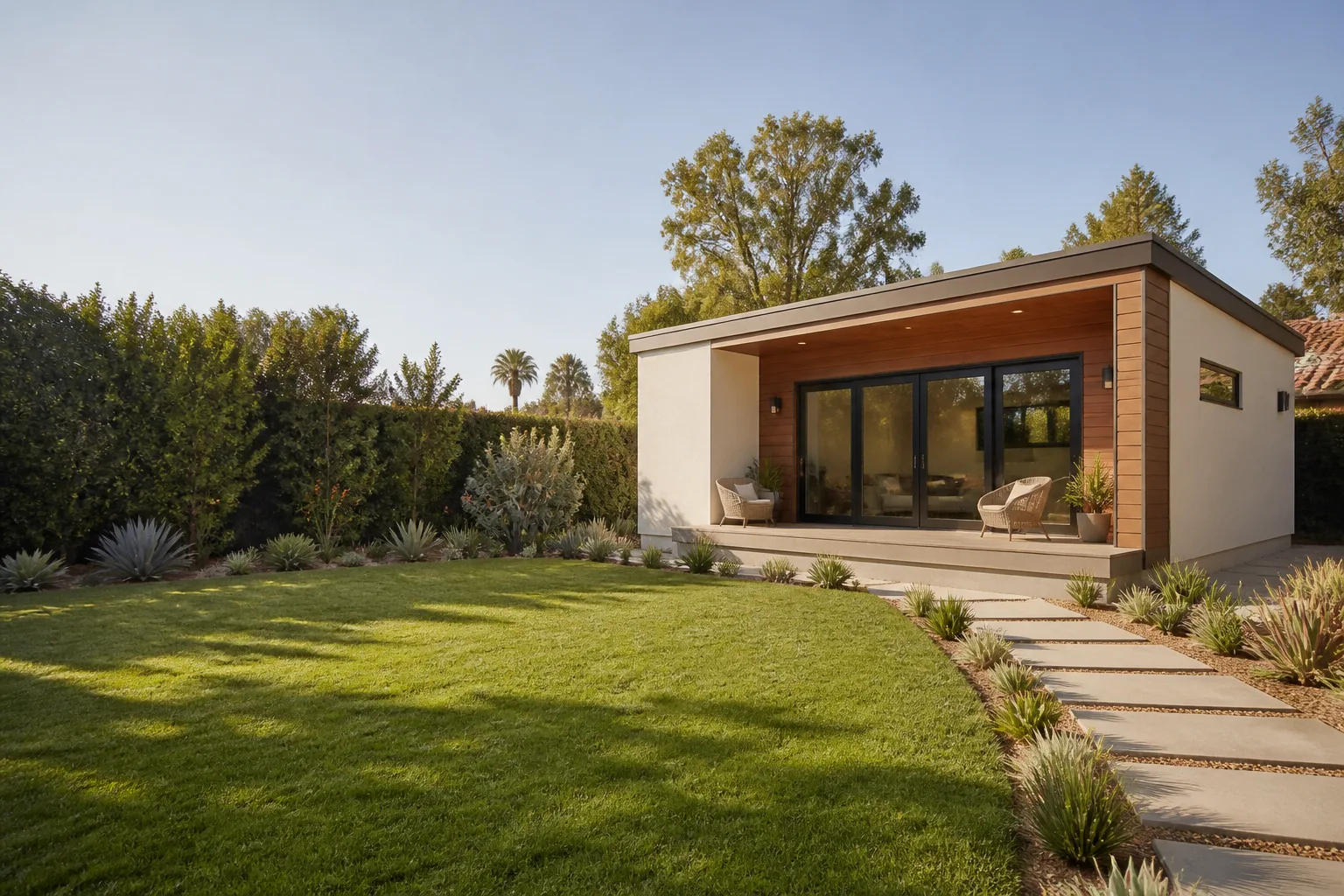
A realistic all-in number for a mid-size detached ADU in Enterprise lands between $180,000 and $260,000. A garage conversion can come in under $120,000 because the shell, foundation, and roof already exist. For the full picture on attached additions and room conversions, our Home Addition Contractor in Enterprise page breaks down those builds separately.
What we won’t do is quote you a number and let it move. Every project we take on gets a written price before any work starts, and the price you sign is the price you pay unless you personally request a change. That’s the whole point of getting the scope on paper.
Prefab vs. Stick-Built: Which Fits Your Enterprise Lot?
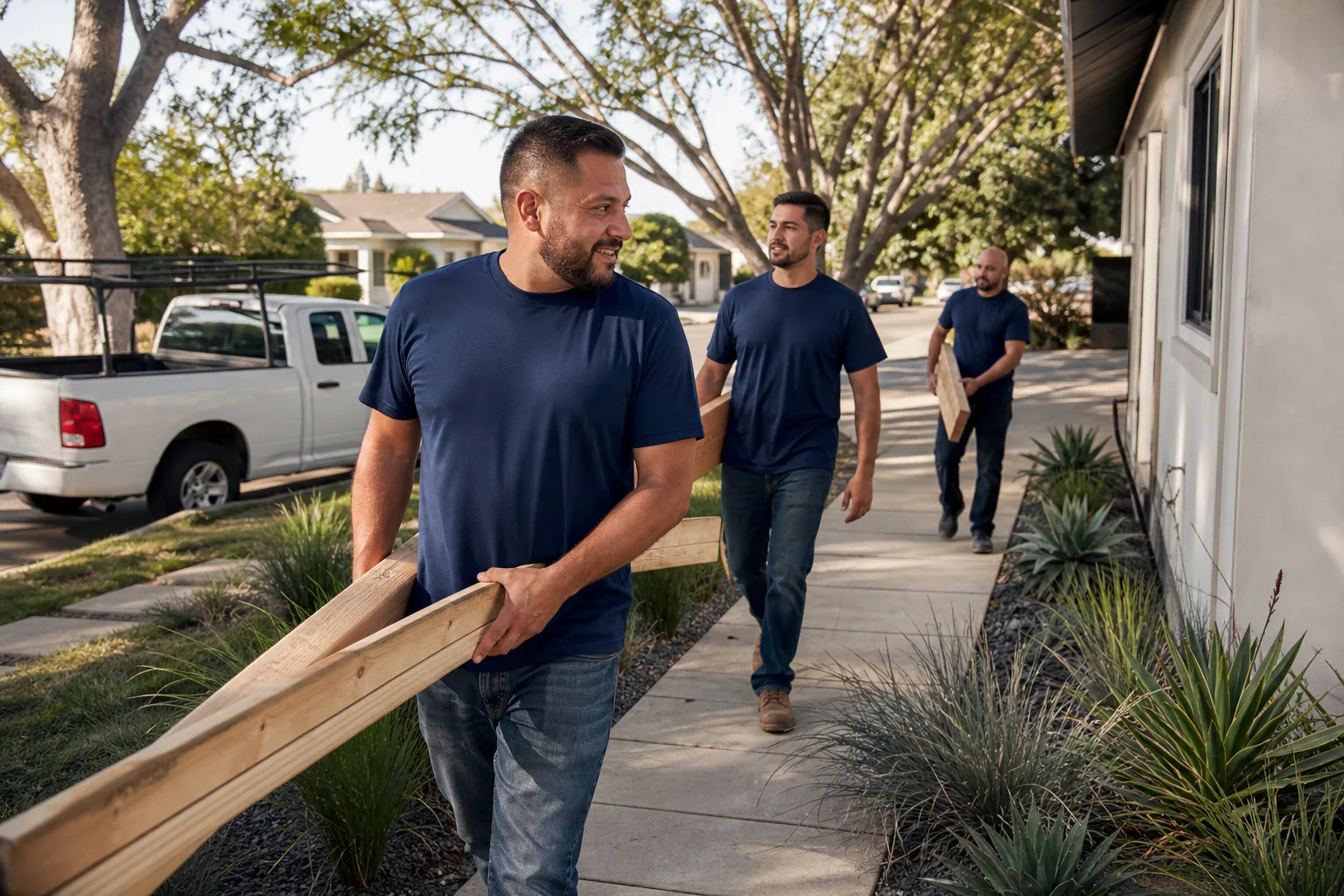
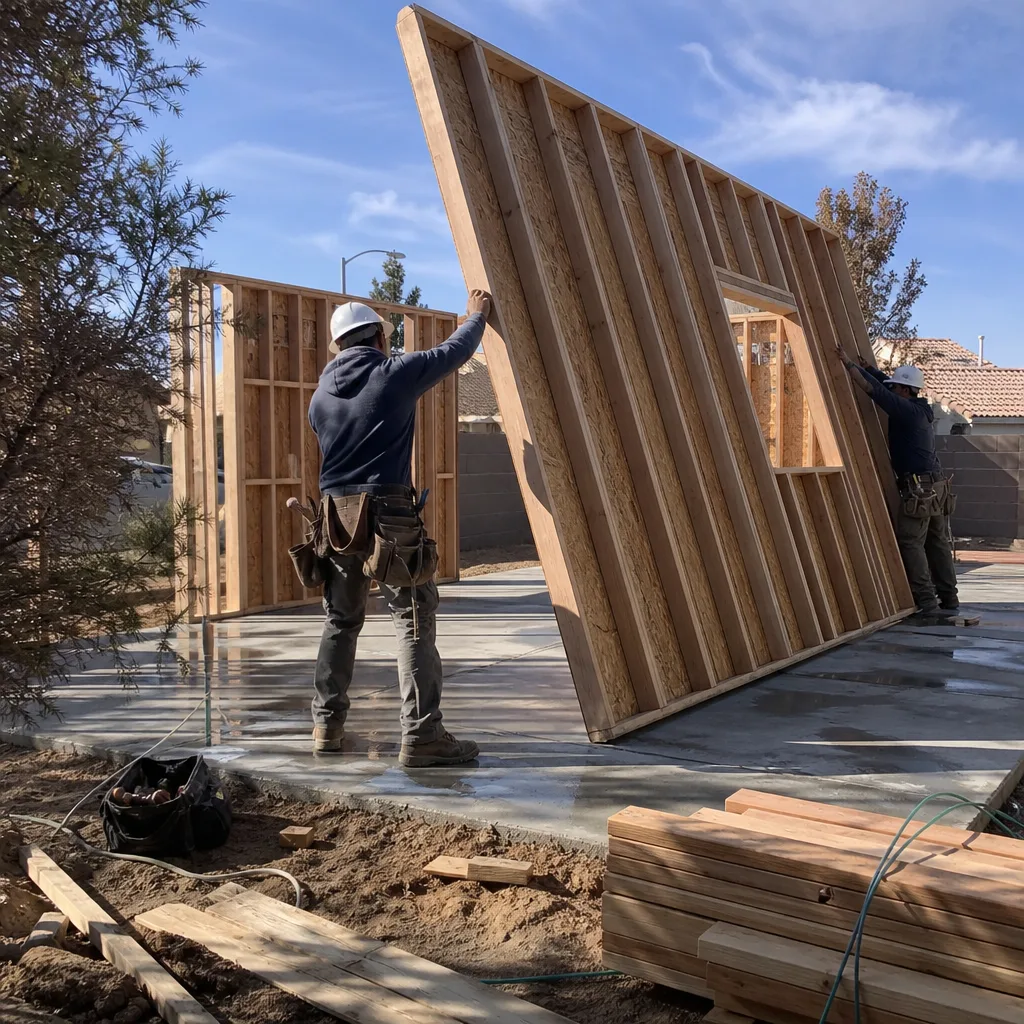
Prefab means the unit is built in a factory in panels or modules, then trucked to your lot and assembled. A prefab panel is a wall section finished in a controlled environment. Stick-built means everything happens on your site, one board at a time. Neither is automatically better. The right call depends on your access, your timeline, and how much customization you want.
Prefab wins when:
- Your lot has clear truck access for delivery. Tight side yards and low utility lines are dealbreakers.
- You want a predictable schedule, because factory construction isn’t rained out or held up by summer heat.
- You’re comfortable choosing from a curated catalog of designs.
Stick-built wins when:
- Your lot is irregular, sloped, or hard to reach.
- You need a custom footprint to fit between a pool and a property line.
- You want to match the existing house exactly, down to the roof pitch and window trim.
We’re authorized to build with some of the strongest names in the prefab space, including Abodu, Dvele, Cover, and Mighty Buildings, and we also build stick. That matters less because of the badge and more because you can compare a real prefab option against a real stick-built quote before you commit. Homeowners can research those brands independently, which is exactly how it should work. Exterior materials also matter in the desert sun, and James Hardie cladding holds up well against the Enterprise heat cycle of 105-degree summers and cool winter nights.
The Utility Hookup Costs That Surprise Homeowners
This is where budgets break. The ADU itself might be perfectly priced, and then the electrician opens your panel and finds no room for a second dwelling. A panel upgrade is a real, common cost in older Enterprise subdivisions, and it’s the single line item most homeowners didn’t plan for.
What to have checked before you sign anything:
- Electrical capacity. Your existing panel needs enough open breaker space and enough service amperage for the ADU’s load. Upgrades run $3,000 to $15,000 depending on what’s involved.
- Sewer lateral. The line from your house to the main may need replacing or upsizing if it’s old or undersized. Plan $5,000 to $20,000 if it needs work.
- Water line. Pressure and line size matter for a second dwelling, especially at the far end of the lot.
- Gas. If the ADU will have a gas range or water heater, the run and meter capacity get checked too.
- Utility trenching. Running new lines from the main house to a detached unit means digging, and digging in Enterprise’s caliche-heavy soil is slower and more expensive than homeowners expect.
The lesson is simple: get a utility assessment before design, not after. We put the utility scope and its price in writing alongside everything else, so the surprise never lands mid-build.
The Written-Contract Checklist
A verbal estimate is not a contract. Before a shovel turns on your Enterprise ADU, your builder agreement should contain every item below in writing. If any of these is missing, ask for it before you sign.
- A fixed price broken into line items so you can see what each phase costs and spot what’s excluded.
- A written scope of work naming exactly what’s included: finishes, appliances, fixtures, site work, cleanup, and haul-away.
- A schedule with milestones, understanding that weather, county review, and factory lead times can shift dates.
- Who pulls the permits and that they’re included in the price, not billed later.
- A warranty term spelled out. Ours is the 365-Day Done Right Promise: if something we built isn’t right within a full year, we come back and make it right.
- Change-order rules stating that nothing changes without your written approval and a stated price.
- Payment schedule tied to milestones, not a big deposit before work begins.
- A named contact and a live phone number you can reach during the build.
The written price before work starts is the standard we hold ourselves to on every job. Our broader Room Addition Contractor in Enterprise page explains how the same guarantee applies to interior additions.
How Long an Enterprise ADU Takes
Plan on six to ten months from first call to move-in for a detached unit, and four to six months for a garage conversion. The construction itself is often the fastest part. Design, county plan review, and utility work take the longest, and county review timelines vary by workload and by how complete your submittal is on day one.
The phases break down roughly like this:
- Design and engineering: four to eight weeks, faster if you choose a prefab model with existing plans.
- County permit review: varies, but plan for a couple months and expect one round of comments.
- Site work and foundation: two to four weeks.
- Construction or prefab assembly: eight to sixteen weeks.
- Utility hookups and final inspection: two to four weeks.
We won’t promise you a specific permit approval date, because the county sets that schedule, not us. What we can promise is that you’ll know where your project stands at every phase, with photo updates and a real person answering the phone when you call.
Rental Income and HOA Rules to Check First
Many Enterprise homeowners build an ADU to generate rental income, and the math can work well given Las Vegas Valley rental demand. But two rules decide whether the plan is viable. First, county requirements on short-term versus long-term rentals and owner-occupancy need to be confirmed in writing for your parcel. Second, your subdivision’s HOA and recorded CC&Rs may restrict rentals, require architectural approval, or limit unit size in ways the county code doesn’t.
Read your CC&Rs before you design. If your HOA requires architectural review, submit the design early because that approval can run parallel to county review but doesn’t replace it. Not every Enterprise subdivision has an HOA, and those that do vary widely. A quick call to your management company saves months. For the full menu of what we build in Enterprise, start at Benson ADU Builders Enterprise home.
Common Mistakes to Avoid
- Filing with the City of Las Vegas. Most Enterprise properties are unincorporated Clark County, and filing in the wrong jurisdiction costs weeks. Confirm your jurisdiction from the parcel map first.
- Buying plans before checking setbacks and lot coverage. A plan that fits a standard lot may not fit yours once the pool and patio are counted. Measure your lot before you shop.
- Skipping the utility assessment. An old 100-amp panel or a failing sewer lateral can add $20,000 to a project that looked affordable on paper. Get the electrical and plumbing checked early.
- Ignoring HOA and CC&R restrictions. County approval doesn’t override a recorded deed restriction. Read your CC&Rs and submit to architectural review before design locks in.
- Accepting a verbal estimate. A price that isn’t in writing has nothing behind it. Ask for a line-item written quote before you sign.
- Forgetting desert-specific details. Shade, insulation, and window orientation matter more in Enterprise’s summer heat than in most markets, and a poorly sited unit costs more to cool every year.
- Choosing a builder without checking their warranty. A one-year written warranty with a free return visit is a different commitment than a handshake. Read the warranty terms, not just the price.
When to Call a Professional
Call a professional the moment you’re considering an ADU, not after you’ve bought plans. The rules that decide your project’s size, placement, and utility cost are all specific to your parcel, and no online calculator accounts for your actual lot. If you’re converting a garage, adding a detached unit for family, or planning a rental property, the early conversations are where money gets saved. Electrical panel work, gas line connections, and sewer lateral replacement should always go to trained, licensed professionals; these systems carry real safety risk and a mistake can be dangerous as well as expensive. Benson ADU Builders Enterprise offers free estimates in Enterprise; call (844) 980-0541 to schedule yours. We’ll walk your lot, confirm your jurisdiction, and put a written price in your hands before any work starts.
Frequently Asked Questions
Most Enterprise ADUs land between $120,000 and $300,000+, with a realistic mid-range detached unit at $180,000 to $260,000 all-in and a garage conversion often under $120,000. The variables are site work, finishes, and utility upgrades. Call (844) 980-0541 for an exact quote; estimates are free.
Most Enterprise properties are in unincorporated Clark County, so the permit goes to Clark County’s building department rather than the City of Las Vegas. Confirm your jurisdiction from the assessor’s parcel map before you submit anything. A builder who files in Enterprise regularly will know the county checklist.
No on our jobs. You get a written price before any work starts, and changes happen only if you personally request a change in scope, with the cost stated and approved in writing. Call (844) 980-0541 to schedule your free estimate.
Yes, permits are part of the project and their cost appears in the written quote, not as a surprise later. We handle county submittals and inspections so you’re not chasing paperwork. Call (844) 980-0541 to talk through your project.
Often yes, and it’s usually the fastest and cheapest route because the shell, foundation, and roof already exist. Garage conversions also sidestep most lot coverage math since the footprint is already counted. Confirm setback and code specifics for your parcel before design.
Every project is covered by our 365-Day Done Right Promise: if something we built isn’t right within a full year, we come back and fix it, and any covered repair that fails gets a free second visit. The guarantee is in writing on every project. Call (844) 980-0541 with questions.
The Bottom Line
Building an ADU in Enterprise is a construction project wrapped around a zoning puzzle. Get the jurisdiction right, read your setbacks and lot coverage carefully, price the utilities before you design, and put everything in writing before a shovel turns. Do those four things and the unexpected costs mostly disappear. Enterprise homeowners who skip them are the ones who discover a panel upgrade or a CC&R restriction after they’ve already paid for plans. Start with the free estimate, get a written price, and let the rules shape the design instead of the other way around.
Ready to price your ADU? Call Benson ADU Builders Enterprise at (844) 980-0541 for a free estimate. We’ll confirm your Clark County jurisdiction, walk your lot, and hand you a written price before any work starts.
Written by the team at Benson ADU Builders Enterprise.