Last updated November 18, 2026
ADU Builders Maintenance Checklist for Enterprise Homeowners
Las Vegas Valley tap water averages a hardness of 278 ppm, nearly triple the national median. That single number means an ADU’s water heater, low-flow fixtures, and mini-split coils in Enterprise scale up in roughly half the time they would in most U.S. cities. Add 110°F summers and spring dust storms that coat every condenser coil in the valley, and a maintenance schedule written for a mild-climate state becomes a money-losing document. This guide gives you a month-by-month calendar built for Clark County, the descaling intervals your fixtures actually need, and the tasks that protect your manufacturer warranties from brands like Dvele, Abodu, and Mighty Buildings.
Quick Answer
An ADU in Enterprise needs maintenance on a desert calendar, not a four-season one: mini-split filters every 30 days during cooling season, tankless water heater descaling every 6 to 12 months because of 278 ppm hard water, coil cleaning twice a year around dust season, and an annual record of every task kept on-site. Skipping the water treatment and coil cleaning steps is the fastest way to void prefab and HVAC warranties. Budget $400 to $900 a year for supplies plus two professional visits.
Table of Contents
- Why an Enterprise ADU Needs a Desert Maintenance Calendar
- The Month-by-Month Checklist for Clark County
- Hard Water Descaling: Tanks, Aerators, and Ice Makers
- Mini-Split and Ductless HVAC Care in a Dust Environment
- Which Skipped Tasks Void Your Prefab and Materials Warranties
- Building Your One-Page Annual Inspection Log
- What ADU Maintenance Costs in Enterprise
Why an Enterprise ADU Needs a Desert Maintenance Calendar
Most ADU maintenance checklists you’ll find online were written for climates with four distinct seasons and soft water. Neither applies in Enterprise. Our summers run weeks of triple-digit heat, our water comes out of the tap at roughly 278 ppm hardness, and spring winds push fine Mojave dust into every gap, louver, and filter in a structure. Each of those stressors hits a different system at a different time of year. A generic spring-and-fall checklist misses all three.
Temperature swings matter here too. An ADU bakes in afternoon sun and then cools fast after dark, so exterior sealants, caulk lines, and expansion joints on a room addition in Enterprise flex more in a single week than they would in a month of mild coastal weather. If you built with prefab panels or a modular shell, the manufacturer’s warranty assumes the envelope stays sealed and the mechanicals stay clean. Your job as the owner is to prove both with dated records.
What that means in practice:
- Cooling equipment needs attention from April through October, not just once in spring.
- Water-using appliances need descaling on a fixed interval tied to hardness, not to how the water “looks.”
- Envelope and roof tasks cluster around dust season and the summer monsoon weeks in July and August.
- Every task needs a date and a photo, because that’s what an insurer or buyer will ask for later.
We’ve seen ADUs in Enterprise that were beautifully built and still needed a $1,400 coil-and-valve repair inside three years, simply because nobody cleaned the condenser through two dust seasons. The calendar below is built to prevent that.
The Month-by-Month Checklist for Clark County
Here is the schedule we hand to homeowners at the end of a project. Print it, tape it inside the ADU’s utility closet, and check items off with the date. It follows the Clark County climate calendar rather than a generic four-season template.
- January: Replace the HVAC filter. Inspect caulk and weatherstripping on doors and windows after winter cold snaps. Test smoke and CO alarms. Flush the water heater if it’s tank-style.
- February: Clean range hood and bathroom exhaust fan blades. Check the attic or roof cavity for pest entry. Photograph anything that looks like a new crack.
- March: Pre-dust-season prep. Vacuum mini-split filters, clear debris from the outdoor condenser pad, and hose down exterior walls. Inspect roof flashing before the wind picks up.
- April: First cooling-season condenser coil rinse. Check the condensate drain line for algae. Swap in fresh filters. Descaling step if you’re on the 12-month tankless interval.
- May: Test the AC under full load on a hot afternoon. Check door sweeps so cool air stays in. Inspect exterior paint and stucco for sun damage.
- June: Mid-cooling-season filter change. Clean aerators on every faucet. Inspect the ice maker line and filter.
- July: Monsoon prep. Clear gutters and roof drains, check grading so water moves away from the slab, and confirm window seals. Second condenser coil cleaning.
- August: Repeat filter change. Inspect for water intrusion after storms. Check the water heater’s anode rod if tank-style.
- September: Post-monsoon inspection. Photograph roof and walls. Clean the mini-split’s indoor blower wheel if airflow feels weak.
- October: Second descaling step if you’re on the 12-month tankless interval. Clean the dryer vent. Inspect exterior lighting and outlets.
- November: Pre-winter check on heating function. Seal gaps around pipes and penetrations. Drain and store garden hoses.
- December: Year-end log review. File photos, invoice copies, and filter change dates in one folder for warranty and insurance purposes.
You’ll notice cooling tasks dominate half the year. That’s correct for Enterprise. Air conditioning in an ADU here runs more hours than heating by a wide margin, and every one of those hours pulls dust through the filter.
Hard Water Descaling: Tanks, Aerators, and Ice Makers
Hard water is the single most expensive maintenance issue in an Enterprise ADU, and it’s the one homeowners underestimate. At 278 ppm, calcium and magnesium settle out of the water and bond to hot surfaces. Scale builds faster inside a tankless heat exchanger than anywhere else, because that’s where the water gets hottest. Left alone, scale cuts flow, drives up energy use, and voids the manufacturer’s warranty on most tankless units.
Here’s the interval schedule we recommend for Enterprise:
- Tankless water heater: Descaling every 6 months if you have no whole-home softener, every 12 months with one. Use a food-grade white vinegar flush or a dedicated descaling kit, following the manufacturer’s instructions exactly.
- Faucet aerators: Remove and soak in a 50/50 vinegar-water solution every 60 to 90 days. Replace screens once a year (they’re inexpensive).
- Showerheads: Soak quarterly. Replace any low-flow head that loses pressure after cleaning.
- Ice maker: Replace the inline filter every 6 months, or install a scale-inhibiting filter if your unit accepts one. Clean the ice bin monthly.
- Tank water heater: Flush sediment every 6 to 12 months. Have the anode rod inspected annually; in hard water it sacrifices itself faster than the manual suggests.
The best long-term fix is a whole-home water softener or a scale inhibitor on the ADU’s supply line. A softener sized for a one- or two-bedroom ADU typically runs $800 to $2,000 installed, depending on whether you’re tying into the main house. We’ve seen that cost paid back within the first few years of hot-water appliance life in Enterprise, and it makes every descaling task easier.
One more tip: keep a maintenance log for the tankless unit with the flush dates. When a technician opens the unit and finds a scale-free exchanger, a warranty claim on any component goes far smoother.
Mini-Split and Ductless HVAC Care in a Dust Environment
Ductless mini-splits are the workhorse of most prefab ADUs, and they earn their reputation in moderate climates. In Enterprise, the dust makes them high-maintenance. Fine Mojave dust passes through exterior louvers, sticks to the indoor blower wheel, and coats the outdoor condenser coil. A dirty coil forces the compressor to work harder, which drives up energy bills and eventually kills the unit.
Filter cleaning is the task that matters most, and the interval is shorter than most manuals say:
- Every 30 days during cooling season (April to October). Remove the indoor filter, vacuum or rinse it, dry fully, and reinstall. Set a recurring reminder on your phone.
- Every 6 months, have the indoor blower wheel and evaporator coil cleaned by a professional. The blower wheel is where dust accumulates invisibly.
- Twice a year (April and July), rinse the outdoor condenser coil with a garden hose on low pressure, after turning the power off at the disconnect. Do not use a pressure washer.
- Every 12 months, a full professional service: refrigerant charge check, condensate drain flush, electrical connection inspection, and a written report.
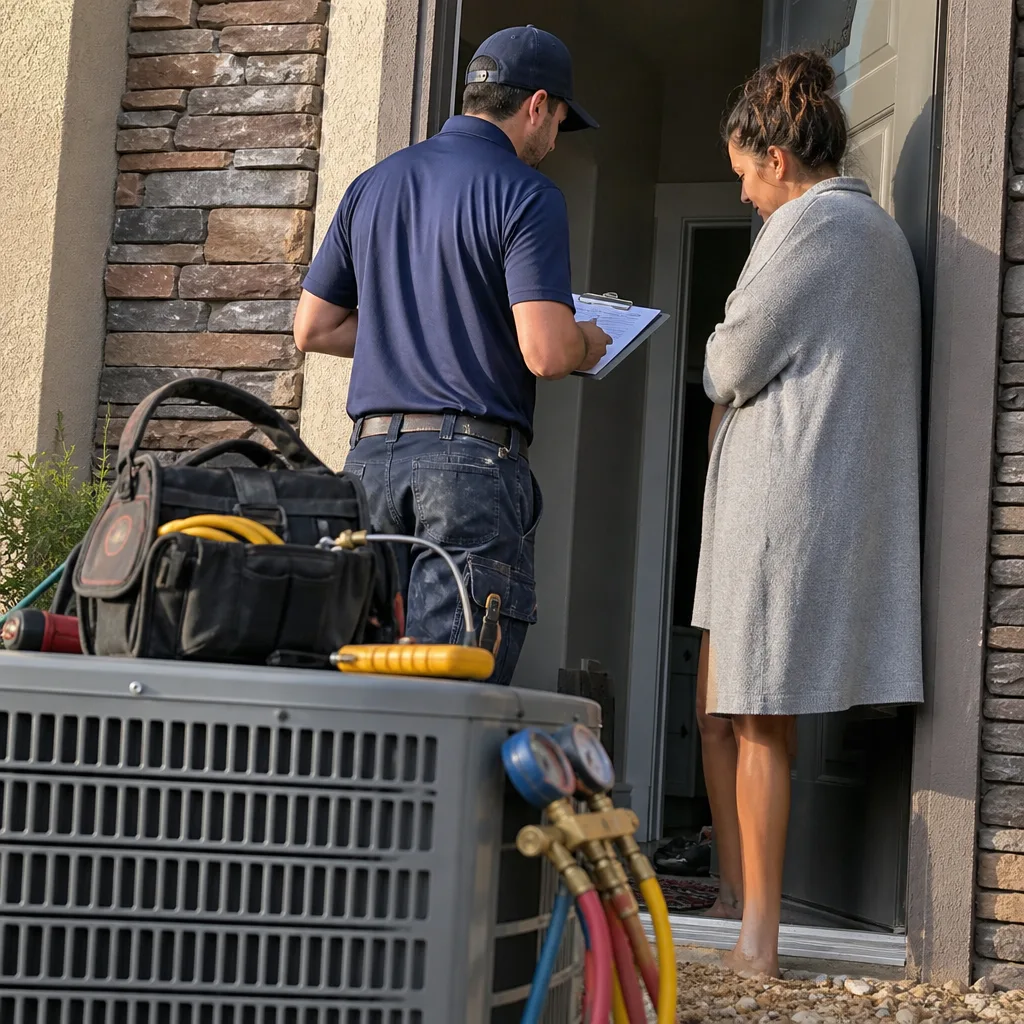
At the end of a project, we always recommend the homeowner set up a service relationship with a local HVAC technician who works on the specific brand installed. Mini-split parts and refrigerant procedures vary by manufacturer, and warranty service usually requires an authorized tech.
A dust season prep step many owners skip: install a simple windscreen or plant a low hedge on the windward side of the outdoor unit. In Enterprise, that small barrier cuts the dust reaching the condenser by a meaningful amount over a season.
Which Skipped Tasks Void Your Prefab and Materials Warranties
Every prefab ADU builder we work with, from Abodu to Dvele to Mighty Buildings, ties the structural and mechanical warranty to homeowner maintenance. The wording varies, but the pattern is consistent. Skip the documented maintenance, and a future claim on the exact system you neglected gets denied. The three categories that matter most:
- HVAC manufacturer warranties: Almost all require documented filter changes and periodic professional service. Missing filter maintenance is the most common reason a compressor claim gets denied.
- Water heater warranties: Tankless makers require descaling on a schedule tied to water hardness. In Enterprise, the hardness disqualifies a “never descale” argument instantly.
- Envelope and cladding warranties: James Hardie and similar cladding systems require periodic cleaning, proper paint maintenance, and prompt repair of any water intrusion. A roofline leak that goes unreported and causes rot gets excluded.
- Panel and shell warranties: Prefab panel systems like those from Plant Prefab require the owner to keep roof drains clear and report any movement, cracking, or water staining in writing within a set window.
- Foundation and slab warranties: Water management around the ADU is on you. Grading that lets monsoon runoff pool against the slab is a fast path to a denied claim.
If you built through ADU builders in Enterprise, your project file from us includes the warranty documents for every installed system. When something is unclear, our team can point you to the exact clause. The Benson ADU Builders Enterprise home page has the overview of how our projects are documented from day one, which makes warranty tracking far easier down the road.
One practical rule: before you call any manufacturer for a warranty claim, have your maintenance log and dated photos ready. The company will ask for both. A clean record is the difference between a covered repair and a bill.
Building Your One-Page Annual Inspection Log
Your maintenance log is a document you’ll use twice in your life as an owner: once at sale, once at an insurance claim. It needs to be one page, kept inside the ADU, and updated with a date and a photo each time something is done. Here is the template we recommend.
- Property and ADU basics: Address, ADU size, construction date, and the brand of the shell, HVAC unit, and water heater.
- Monthly entries: Date, task completed, who did it (owner, technician, or company), and a photo filename.
- Annual summary: Professional HVAC service date and report, water heater descale dates, roof inspection, and any repair receipts.
- Weather events: Date and description of any monsoon or wind event, plus a note on what you inspected afterward.
- Contact block: Your HVAC tech, plumber, and the contractor who built the ADU, with phone numbers.
Keep the log in a plastic sleeve inside the utility closet, and snap a photo of it once a quarter to store on your phone. Backing it up digitally matters as much as the paper copy, particularly since buyers and insurers increasingly ask for digital records. Our technicians have up to 20 years of experience and can walk you through this template during a maintenance walkthrough, or send an editable copy for any home addition in Enterprise we deliver.
What ADU Maintenance Costs in Enterprise
Ballpark maintenance costs for an Enterprise ADU with a single mini-split and a tankless water heater. These are ranges based on local market pricing; exact quotes vary by brand, age, and how much deferred maintenance exists.
- Annual mini-split service (one head): $120 to $220
- Additional mini-split head service: $75 to $120 each
- Tankless water heater descale: $150 to $300, or DIY with a kit
- Tank water heater flush: $100 to $180
- Whole-home water softener installed: $800 to $2,000
- Annual supplies (filters, descaling solution, caulk, misc.): $100 to $250
- Annual total, owner-performed with one pro HVAC visit: $400 to $900
- Annual total with all-in professional service: $900 to $1,500
Compare that to the cost of replacing a tankless heat exchanger (often $600 to $1,200 for the part alone) or a compressor on a mini-split ($800 to $1,500 installed). The maintenance line item is by far the cheaper path. Homeowners who call us for a maintenance walkthrough on a project we built get the same written price upfront we give on new projects. If you’re still planning your ADU, our guide to room additions in Enterprise covers the construction side and where maintenance costs fit in the budget.
Common Mistakes to Avoid
- Skipping the June and August filter changes. A monthly filter interval during cooling season sounds excessive until you see how fast a mini-split grinds to a halt with a clogged filter in an Enterprise summer.
- Ignoring the water softener calculus. Descaling everything manually is fine, but the math in hard-water cities usually favors a softener within a few years.
- Cleaning the outdoor coil with a pressure washer. It bends the fins, kills efficiency, and isn’t covered under the equipment warranty. A garden hose on low pressure only.
- Letting pool water, monsoon runoff, or drip lines sit against the slab. Water is the slow killer of ADU foundations. Fix grading before the rainy season starts.
- Not keeping records of any of it. A warranty claim without documentation is a claim that gets denied, no matter how clean the unit actually is.
- Treating the ADU like a spare room instead of a separate structure. It has its own roof, envelope, mechanicals, and water supply. Give it its own maintenance calendar.
- Waiting for a failure to call. A professional maintenance visit costs a fraction of an emergency repair, and it keeps the warranty on the installed systems in good standing.
When to Call a Professional
Some maintenance tasks belong to the owner, and some belong to a trained technician. Call a professional for: any mini-split repair involving refrigerant, coil replacement, or electrical work; water heater descaling involving gas or electrical connections; roof inspection where climbing is required; any sign of water intrusion or rot in the envelope; and any warranty claim, which usually needs a documented service report. If you built through Benson ADU Builders Enterprise, our team can’t handle electrical or gas work, but we can help you identify the right local specialist and walk through the warranty paperwork. For homeowners looking to add an ADU, replace an aging one, or schedule a maintenance walkthrough, we offer free written estimates in Enterprise. Call (844) 980-0541 to schedule yours.
Frequently Asked Questions

Every 6 months if you don’t have a water softener, and every 12 months if you do. The 278 ppm average water hardness in the Las Vegas Valley scales heat exchangers faster than most manufacturer manuals assume, so treat the shorter interval as the baseline for Enterprise.
Yes, during the cooling season. Dust during an Enterprise summer loads a filter to the point of airflow restriction within 30 to 45 days. A monthly clean-out prevents the compressor from running hot and keeps your manufacturer warranty intact.
The most common ones are missed filter changes on the HVAC system, deferred water heater descaling in hard water, and unreported water intrusion or roof leaks. Every prefab brand we work with ties the warranty to documented maintenance, so keep your log current.
Budget $400 to $900 a year if you do the owner tasks and pay a pro for one HVAC visit, or $900 to $1,500 for an all-in professional program. Whole-home water softeners are a separate $800 to $2,000 install and typically pay for themselves over a few years.
Keep a dated maintenance log with photos, and store every professional invoice. At sale, buyers and their inspectors look for proof the ADU has been maintained. A clean record with no unrepaired water damage is worth real money in the Enterprise market.
We can inspect and refer you to the right local specialist for any ADU. For projects we built, our team has the full warranty file and can help you through a claim. Call (844) 980-0541 for a free consultation, whether you’re planning a new ADU or looking after an existing one.
The Bottom Line
An ADU in Enterprise needs a desert maintenance calendar, hard-water descaling on a fixed schedule, and monthly HVAC filter care during the long cooling season. Do those three things and you protect the warranties from brands like Abodu, Dvele, and Plant Prefab, add years to your mechanical systems, and keep a clean paper trail for resale or insurance. Skip them and the repair bills arrive faster than in any mild-climate city. Build the calendar, print the log, set the phone reminders. And if you’re starting an ADU project or adding a room addition in Enterprise, our team will put the plan, the price, and the maintenance schedule in writing before work starts. Every project is backed by The Relay Visibility Guarantee and a 365-Day Done Right Promise, because a written price and a real paper trail belong at the beginning of the relationship, not the end. Call (844) 980-0541 for your free estimate.
Written by the team at Benson ADU Builders Enterprise.