Last updated November 18, 2026
ADU Builders Warning Signs Every Homeowner Should Know
The most dangerous contractor red flag isn’t a missing license. It’s a builder who walks you through the entire project in vivid detail – where the kitchenette goes, how the roofline meets the main house, the exact shade of James Hardie siding – then hands you a one-page contract with no line-item pricing. Everything you just heard lives in the air, not on paper, and the moment work starts you’re negotiating from the back foot. We’ve watched this exact scene play out for Enterprise homeowners adding backyard units for parents, renters, or a home office. This guide teaches you to read contractor behavior and paperwork the way a construction attorney would – the phrases that protect the builder instead of you, the payment schedules that signal a cash-flow crunch, and how to verify a license or a prefab brand relationship in about five minutes.
Quick Answer
Spot a bad ADU contractor by insisting on a written, line-item price before work starts, checking every “allowance” and “unforeseen conditions” clause in the contract, verifying the contractor’s Nevada State Contractors Board license and general liability certificate, and refusing any payment schedule that asks for more than 10-15% upfront. A builder who resists putting numbers in writing, rushes you to sign, or can’t name their subcontractors is showing you how the rest of the project will go.
Table of Contents
- The Verbal Walkthrough Trap
- Contract Red Flags, Decoded
- How to Verify a Nevada Contractor in Under Five Minutes
- Behavioral Warning Signs During the Sales Process
- Payment Schedule Danger Zones
- Authorized Dealer vs. Catalog Orderer: Verifying Prefab Relationships
- Reading References and Portfolios Critically
- How Benson ADU Builders Enterprise Structures Every Project
The Verbal Walkthrough Trap
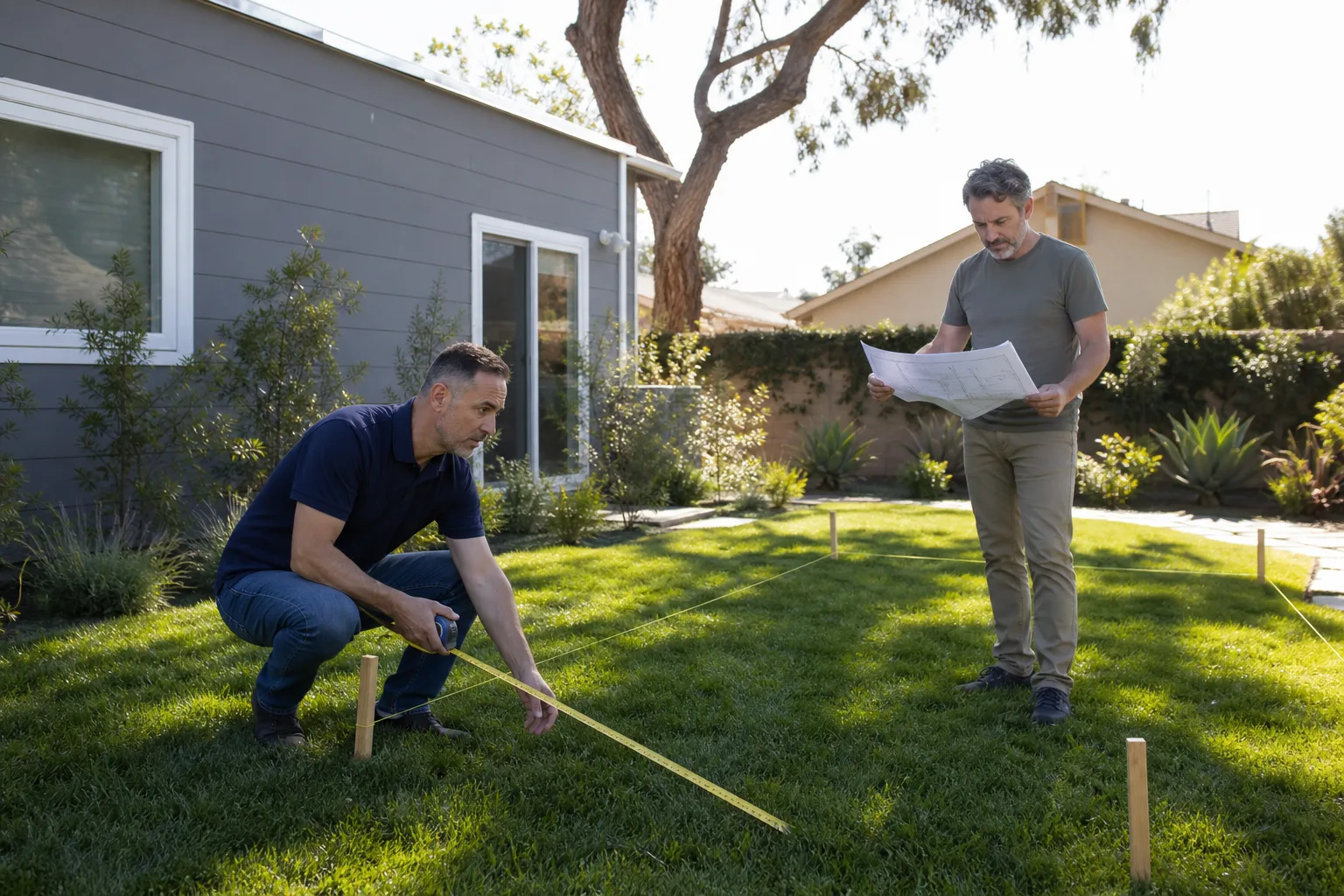
A contractor who can describe your future ADU in convincing detail is not the same as a contractor who will build it for the price you think you agreed to. The verbal walkthrough is theater until it becomes a written scope. When the plan lives only in conversation, the builder controls every interpretation later: the “standard” window becomes an upgrade, the “included” electrical panel turns into a change order, and the number at the end looks nothing like the number you remember hearing.
Here’s a quick test you can run in the first meeting. Ask: “Can you send me a written line-item estimate by email?” A serious ADU builder says yes and delivers within a few days. A problem builder says something like “let’s not get too technical yet” or “we’ll tighten the numbers once we’re under contract.” That second answer is the trap closing.
On a real ADU, line items matter more than on almost any other project. A backyard unit in Enterprise involves site work, utility trenching, a foundation, framing, roof, cladding, electrical, plumbing, HVAC, interior finishes, and permit fees. Each of those is a separate cost center that can drift. A single lump-sum number hides the drift until it’s expensive to argue about.
- Line-item pricing: each cost broken out (site prep, foundation, framing, electrical, plumbing, finishes, permits).
- Spec sheets: exact brands and models for windows, cladding, appliances, and fixtures.
- Schedule: start and finish dates with consequences for slipping them.
- Change-order process: how a mid-project change gets priced and approved, in writing, before it’s executed.
If those four items aren’t on the table before signing, you’re not dealing with a partner. You’re dealing with a verbal agreement wearing a hard hat.
Contract Red Flags, Decoded
Most homeowners read the price and skim the rest. The rest is where the cost risk hides. Read these clauses the way you’d read a rental agreement – assume every sentence exists to protect the writer.
Allowances
An allowance is a placeholder dollar amount for something not yet selected, say $4,000 for light fixtures. Sounds innocent. But if the actual fixtures cost $9,000 – whether because the builder steered you to a pricier line or because “the market” moved – you pay the difference. Many allowances are set artificially low to make the headline price look attractive. Ask: “Is the allowance based on an actual quote from a supplier, and can I see it?”
No-penalty schedule terms
A schedule with no penalty for missing deadlines is a schedule that only binds you. If the contract sets a finish date but attaches no consequence when it slips, you eat the carrying costs: extra rent while you’re displaced, delays on the rental income the ADU was supposed to produce, storage fees. A fair contract attaches financial responsibility to late completion.
“Unforeseen conditions” clauses
This one is genuinely needed on some sites – hidden rock, an undocumented sewer line, poor soil. But a broad clause that lets the builder charge “as needed” for vaguely described surprises is a blank check. The clause should name examples, require written approval before any charge, and set a cap or a process for pricing the surprise.
Missing lien waiver language
A lien waiver is a document stating that a contractor, subcontractor, or supplier has been paid and won’t file a mechanic’s lien against your property. Without waivers – especially from subcontractors and suppliers you never meet – you can end up paying twice: once to your builder, and once to a supplier the builder stiffed. Ask for lien waivers tied to each phase payment. This is basic protection and a professional won’t flinch at the request.
If you’re comparing contractors for a home addition contractor in Enterprise project alongside your ADU, hold every bid to the same contract standards. The clauses travel.
How to Verify a Nevada Contractor in Under Five Minutes
Nevada requires anyone advertising as a general contractor to hold a license from the Nevada State Contractors Board (NSCB), and residential ADU work should be handled under a properly classified license – the C-2 is the residential general contractor classification; check that the classification matches the scope you’re hiring for. A builder who can’t tell you their license number without hesitation has already failed the test.
Here’s the five-minute check:
- Ask for the license number and classification in writing (email is fine). Note it down.
- Search the NSCB license lookup online. Look for “active” status and confirm the classification covers residential construction.
- Check for complaints, disciplinary actions, or citations on the same record. A single old dispute isn’t disqualifying; a pattern is.
- Ask for the certificate of general liability insurance and call the insurer’s number on the certificate to confirm it’s active. Certificates can be fabricated or expired.
- Ask for the workers’ compensation certificate if they employ anyone on-site. If they don’t carry it, an injured worker can come after you.
None of this is exotic. It’s the same due diligence a construction attorney would run on a first call. Enterprise homeowners have every right to ask, and a reputable builder offers it without being prompted. If the certificate is “at the office” and never arrives, that’s your answer.
One wrinkle specific to Nevada: permit requirements vary by jurisdiction, and Enterprise projects fall under local building department rules rather than a single statewide timeline. A contractor who speaks confidently about exact permit timelines without ever having pulled permits in that jurisdiction is telling you something. Ask: “Walk me through a recent permit you pulled here.”
Behavioral Warning Signs During the Sales Process
The sales process is a preview of the build. Builders who run a disorganized, pressured, opaque sales process usually run the same way on-site. A few tells we’ve learned to watch for – and to warn friends about – go a long way.
- Resistance to putting prices in writing. “We’ll send it over once we finalize” that never arrives is a tactic, not laziness.
- Pressure to sign now. “This price is only good until Friday” on a six-figure ADU is urgency fiction. Real prices come from real quantities, not from a clock.
- Can’t name subcontractors. Electrical, plumbing, and HVAC are usually handled by licensed subs. A builder who won’t name them or provide their license numbers is hiding the labor chain – and the supply chain risk.
- Dodges the “what’s your warranty?” question. A written workmanship warranty is table stakes. A verbal promise of “we stand behind our work” isn’t worth the paper it isn’t written on.
- No references from the same type of project. ADU experience is not interchangeable with remodeling experience. Ask for three finished ADUs, with addresses or photos, and call those homeowners.
- Salesperson who disappears after signing. The person who sold you the job should be involved through completion, or at minimum introduce you to the project manager before work starts.
The behaviors cluster. One of them alone might be a bad day. Three together is a pattern, and patterns repeat.
Payment Schedule Danger Zones
On a standard ADU build, the fair structure is a modest deposit (10-15% upfront is normal; sometimes less) with the balance released in stages tied to completed, inspected milestones. Anything radically different deserves an explanation in writing.
- 10-15% upfront: normal. Covers mobilization and initial materials.
- 20-30% drawn against framing milestone: normal, once the foundation is complete and inspected.
- 40-50% before any work starts: cash-flow warning sign. The builder is funding their payroll from your deposit rather than from their own working capital or construction financing.
- 50%+ before work starts: hard no. Do not pass go.
- “Final” payment requested before final inspection: the last payment should be held until you have the certificate of occupancy and a clean punch-list.
Never pay in cash. Never pay ahead of a documented milestone. And never pay a draw without a matching lien waiver from the subs who did that phase – the two documents travel together for a reason.
If a builder won’t itemize the payment schedule alongside the work schedule, they’re hiding the cash-flow picture. That picture is yours to see. A serious builder hands you a digital invoice, a written draw schedule, and a photo record of every milestone before they ask you to send a dime.
Authorized Dealer vs. Catalog Orderer: Verifying Prefab Relationships
Prefab ADUs are a genuine advantage: factory-built panels, predictable quality, tighter site timelines. Brands like Abodu and Dvele are worth researching on your own, and a builder who works with them should be able to show you exactly how that relationship works.
Here’s the distinction that matters. An authorized dealer or approved builder has a formal relationship with the brand – trained on the product, supported by the manufacturer, sometimes listed on the brand’s own website. A catalog orderer just has a vendor account and will place an order for whatever’s cheapest that week. The practical difference shows up in warranty support, engineering sign-offs, and how fast a problem gets solved if a panel is damaged in transit.
Ask three questions in the first meeting:
- “Are you an authorized dealer or approved builder for the prefab brands you’re recommending? Can you link me to your listing on their site?”
- “Which model and cladding line are we pricing, exactly?”
- “If a panel arrives damaged, who pays for the replacement and who coordinates it?”
None of this is a knock on picking a prefab brand – the opposite. The point is that a builder who claims brand relationships they don’t have is showing you exactly how they treat facts. And facts are the entire foundation of an ADU budget. If the cladding is James Hardie, ask for the specific product line. If the prefab module is a specific Abodu model, ask how long it’s been in that brand’s builder program.
Reading References and Portfolios Critically
Every contractor has three references who will say only glowing things. That doesn’t make references useless – it makes them something you have to query properly.
- Ask for references from ADU projects, not just kitchen remodels.
- Ask reference homeowners about change orders: how many, what they cost, how they were approved.
- Ask about the punch list: what was on it and how fast it got completed.
- Ask one direct question: “Would you hire them again for a second ADU?”
- Look at finished-project photos and check whether the finish details look consistent (crisp caulk lines, level siding, drains aligned) rather than staged.
The one year after completion is where the real story lives. A builder’s behavior during warranty work tells you more about their character than the build ever will. A written 365-day promise with a free second visit if a covered repair fails is the kind of guarantee you can actually verify – ask any contractor you’re considering what happens on day 200 if your mini-split stops cooling.
How Benson ADU Builders Enterprise Structures Every Project
We built our process around the exact warning signs above, because we’ve watched them cost Enterprise homeowners time, money, and a year of their lives. We’re part of the Relay Home Co. family, established in 2006, and each Benson ADU Builders location is independently owned and operated under The Relay Visibility Guarantee. Here’s what that looks like in practice.
You get a written price before any work starts – full stop. No verbal estimates that drift, no scope creep billed after the fact. You get a written guarantee stamped on every project, with the 365-Day Done Right Promise behind it: if the work isn’t right within a full year, we make it right, and if a covered repair ever fails, we come back for a free second visit. Our technicians have up to 20 years of experience, they’re background-checked, and they arrive in uniform so you always know who’s on your property.
On the product side, we’re authorized to build with leading prefab and materials brands including Abodu, Cover, Dvele, Mighty Buildings, Boxabl, Plant Prefab, Tuff Shed, and James Hardie. That gives you curated options you can research independently rather than a single take-it-or-leave-it design – and it means a real, verified relationship behind every panel and sheet of cladding. When you’re ready to compare options, our team can walk you through an ADU build or a room addition contractor in Enterprise project on the same terms. If you haven’t read our main guide yet, start with ADU Builders in Enterprise to see the full scope of what we build.
Common Mistakes to Avoid
- Signing a lump-sum contract with no line items. A single number hides every cost that can drift. Insist on a line-item breakdown for site work, foundation, framing, trades, finishes, and permits.
- Treating an allowance as a fixed price. Allowances shift cost risk to you. Ask for a supplier quote behind every allowance and get a written overage process.
- Paying more than 15% before work starts. Large upfront deposits are the clearest cash-flow warning sign in construction. Walk if you see 50%.
- Skipping the NSCB lookup. It takes five minutes. Every complaint count, license status, and classification is public in Nevada. Use it.
- Trusting a prefab brand claim without verification. Authorized dealers can point to their listing on the brand’s site. “We can order from them” is not the same thing.
- Hiring the lowest bid without asking why it’s lowest. On an ADU, a bid that’s 20% under the field usually means an allowance was set artificially low, a scope item was omitted, or a subcontractor isn’t fully licensed.
- Forgetting about HVAC and drainage for our climate. Enterprise summers and monsoon-season runoff put real demands on ADU mechanicals and site grading. Make sure both are on the line-item list, not buried in “miscellaneous.”
For a broader view of how we structure ADU work top to bottom, the Benson ADU Builders Enterprise home page covers our full service picture.
When to Call a Professional
Call in a professional ADU builder before you sign anything, not after. The right time to bring in a qualified contractor is at the planning stage – when you’re choosing between a site-built unit and a prefab, sizing the electrical service, or figuring out where the unit meets setback requirements in Enterprise. It’s also the right time if you’ve already received a bid you don’t fully understand, or if a contractor is pressuring you to sign without a line-item price. A second opinion costs nothing and often saves five figures. Benson ADU Builders Enterprise offers free estimates in Enterprise with written pricing before any work starts. Call (844) 980-0541 to schedule yours and walk through the plan line by line.
Frequently Asked Questions
A detailed verbal walkthrough paired with a one-page contract that has no line-item pricing. That gap tells you the builder wants the number to stay flexible – in their favor. Call (844) 980-0541 for a free estimate with written pricing you can compare line by line.
Detached ADUs in Enterprise typically run in the $180,000-$350,000 range depending on size, site work, and finishes, with prefab models often on the lower end of that band and full site-built units on the higher end. Any quote should be broken into line items so you can see what’s driving the number. Call (844) 980-0541 – estimates are free.
Yes. Nevada residential contractors should hold a properly classified NSCB license, and you should verify status and complaint history yourself on the state’s public lookup – it takes under five minutes. A reputable builder will hand over the license number and insurance certificate without being asked twice. Call (844) 980-0541 for a free estimate.
10-15% is normal. Anything above 50% before work starts is a serious cash-flow warning sign and a reason to walk away. Payments should be tied to documented, inspected milestones with matching lien waivers. Call (844) 980-0541 for a free estimate and a written draw schedule.
Ask for the listing on the brand’s own site, and ask which exact model and cladding line they’re pricing. Authorized dealers can point to formal relationships; “we can order from them” is a vendor account, not a partnership. We build with Abodu, Cover, Dvele, Mighty Buildings, Boxabl, Plant Prefab, Tuff Shed, and James Hardie – and can walk you through each. Call (844) 980-0541 for a free estimate.
It covers workmanship for a full year after completion – if something we built isn’t right, we come back and make it right, and if a covered repair fails, we return for a free second visit. It’s in writing, stamped on every project, so the terms aren’t buried in conversation. Call (844) 980-0541 to talk through the full guarantee before you commit.
The Bottom Line
Bad ADU contractors announce themselves long before the first shovel turns. They show up in the phrase “we’ll finalize the price after signing,” in a 50% deposit request, in a contract thick with allowances and thin on lien waivers, and in prefab brand names they can’t back up. Your job is to read those signals plainly, ask the five-minute questions, and insist on line-item numbers before you commit. If a builder resists any of it, the resistance is the answer. If you want a partner who leads with written pricing, a verified brand list, and a 365-Day Done Right Promise in writing, Benson ADU Builders Enterprise is here for it – and the first conversation is free. Call (844) 980-0541 to schedule your free estimate.
Written by the team at Benson ADU Builders Enterprise.