Last updated November 18, 2026
How to Hire an ADU Contractor in Enterprise: A Step-by-Step Guide
The Nevada State Contractors Board logged more than 1,200 complaints in a recent 12-month period, and residential construction sat at the top of the pile. The thread running through most of them: a homeowner hired on a verbal estimate and a handshake, with nothing in writing about scope, schedule, or price. Hiring an ADU contractor in Enterprise is less about finding the cheapest bid and more about knowing which four documents to demand before you sign anything. This guide walks you through the verification steps, the interview questions, and the red flags that separate a real ADU specialist from a crew that disappears at framing.
Quick Answer
To hire an ADU contractor in Enterprise, verify the license on the Nevada State Contractors Board website, collect four written documents (scope, itemized price, milestone payment schedule, and lien waiver process) before signing, and ask ADU-specific questions about setbacks, utility tie-ins, and prefab versus site-built construction. Contractors who can’t or won’t produce those documents in writing are the ones most likely to stall mid-project.
Table of Contents
- The Four Documents You Must Demand Before Signing
- How to Verify a Nevada Contractor’s License in Under Three Minutes
- Red-Flag Interview Answers That Expose a Non-Specialist
- Why the Lowest ADU Bid in Clark County Often Costs More
- What Real-Time Project Tracking Should Look Like
- Prefab vs. Site-Built ADUs: What Enterprise Homeowners Should Weigh
- Enterprise Site Conditions That Affect Your ADU Budget
- What a Realistic ADU Timeline Looks Like
The Four Documents You Must Demand Before Signing
Any legitimate ADU contractor should put four documents in your hands before a shovel turns. If any one of them is missing, treat it as a stop sign.
- Written scope of work. Not a paragraph. A line-by-line description of what’s being built: square footage, footprint, foundation type, roof assembly, electrical panel upgrades, HVAC, finishes, and what’s explicitly excluded. The exclusions matter as much as the inclusions.
- Itemized price. Every major line item with a dollar figure attached – permits, site prep, foundation, framing, MEP (mechanical, electrical, plumbing), finishes, and contingency. Ballpark totals hide scope creep.
- Payment schedule tied to milestones. Payments should release against completed, inspectable work: foundation poured and inspected, framing complete, rough-in passed, final walkthrough. A contractor asking for 50% up front is a red flag, full stop.
- Lien waiver process. Nevada allows subcontractors and suppliers to file liens against your property if they go unpaid. A written process for collecting conditional and unconditional lien waivers at each payment protects you from paying twice.
Benson ADU Builders Enterprise hands over a written price before any work starts, with the same guarantee stamped on every project. If a contractor in Enterprise won’t commit those four documents to paper, walk. The verbal estimate is where the trouble starts.
How to Verify a Nevada Contractor’s License in Under Three Minutes
Nevada requires anyone contracting for work over $1,000 to hold a state license through the Nevada State Contractors Board (NSCB). Verification takes about three minutes online and settles more questions than any interview.
- Go to the NSCB license search page and enter the contractor’s license number or business name.
- Confirm the license status shows active and the expiration date is in the future.
- Check the classification. For ADU work you want either a Class B (general building) or Class A (general engineering) license, or the specific residential classifications that cover single-family construction. A C-3 carpentry or C-36 plumbing license alone doesn’t cover a full ADU build.
- Review the complaint history and any disciplinary actions. Recent, unresolved complaints are worth a direct question.
- Confirm the license lists workers’ compensation insurance and a bond on file. Nevada requires both, and lapses are telltale.
Enterprise sits in Clark County, and the county’s building department will cross-check the license before issuing a permit anyway. Verifying it first saves you weeks of wasted design time. Ask the contractor to walk you through their NSCB record over the phone – a licensed contractor knows exactly where to find it and won’t flinch at the question.
Red-Flag Interview Answers That Expose a Non-Specialist
ADUs are not small houses. They carry their own rules on setbacks, utility sizing, and occupancy. A general remodeler who’s built kitchens for a decade can still botch an ADU. Here are the answers that should make you pause, and the follow-up question that exposes each one.
- “We can pull the ADU permit under our general license.” Follow up: “Which classification on your NSCB record covers a detached accessory dwelling?” If they can’t name it, they aren’t licensed for it.
- “Setbacks are standard, no worries.” Follow up: “What’s the rear yard setback for a detached ADU in Enterprise?” Correct answers depend on zoning and lot size, but a specialist knows to check before quoting.
- “Utilities? We’ll tie into the main house.” Follow up: “What size is the main electrical panel, and will it need an upgrade to carry an ADU?” Panel sizing is the single most common surprise on ADU budgets.
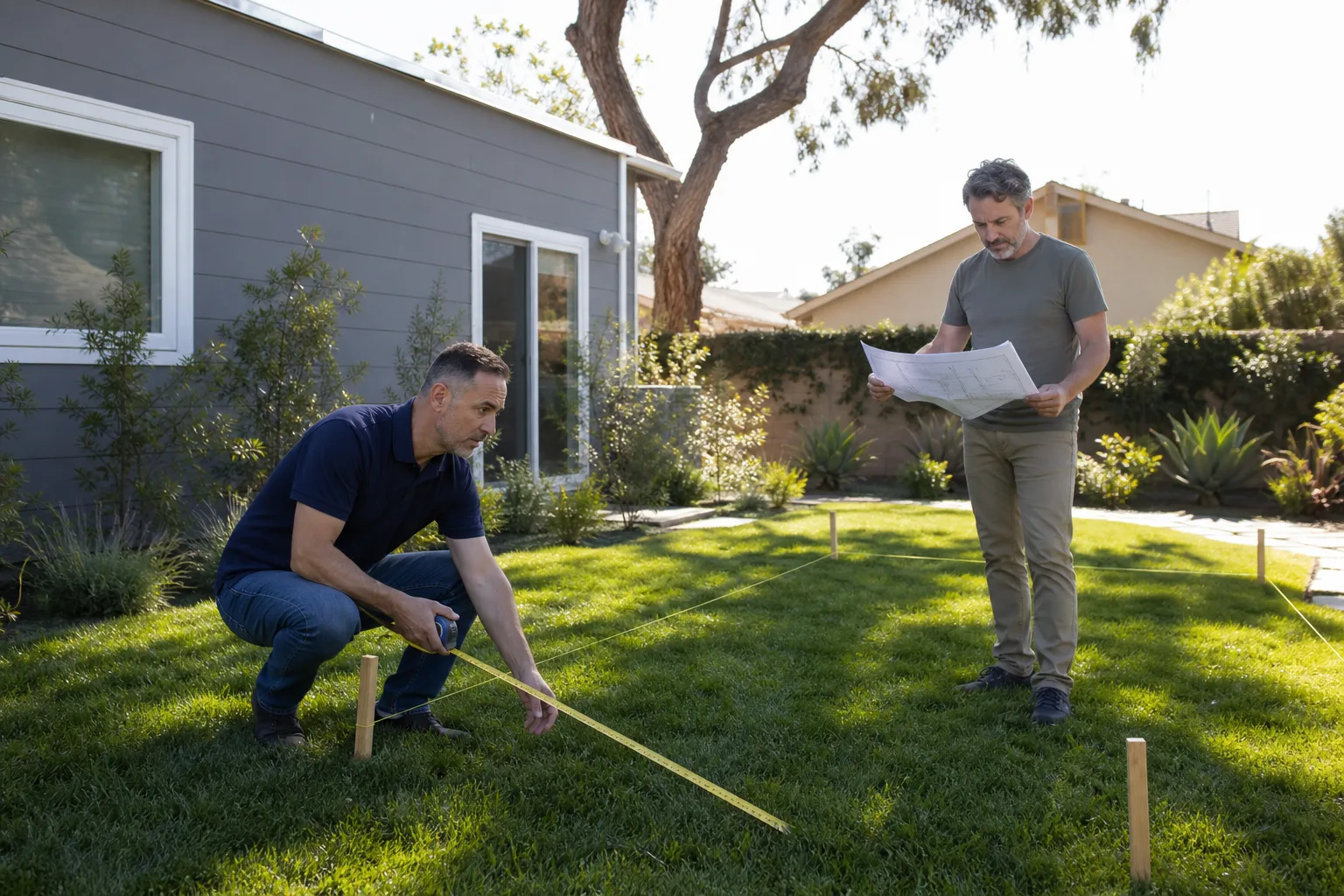
- “No need for a survey, we can eyeball it.” Follow up: “Who’s preparing the site plan?” A legitimate ADU contractor names the surveyor or engineer.
- “We can start next week, don’t worry about permits.” Follow up: “Can I see the permit application?” Unpermitted ADUs create resale and financing nightmares in Clark County.
- “Our price is verbal, we’ll finalize on site.” Follow up: “Can you put that in writing before we sign?” If the answer is no, the answer is no.
Why the Lowest ADU Bid in Clark County Often Costs More
Let’s do the math. Contractor A bids $185,000 for a 600-square-foot detached ADU and Contractor B bids $212,000. The $27,000 gap looks like an easy win. Then framing starts.
Contractor A’s bid excluded the electrical panel upgrade ($4,500), the site survey ($2,800), the concrete driveway extension ($9,200), and the landscape restoration after trenching for utilities ($3,400). All of those items appeared as change orders after the contract was signed. Add a four-week schedule slip from the unplanned panel upgrade and the carrying cost of the construction loan, and Contractor A is now within a couple thousand dollars of Contractor B’s price – with a longer timeline and a lot more stress.
This is scope-creep math, and it’s the reason lowest-bid ADU projects in Clark County routinely finish 12-20% over the original number. The fix is simple: ask every bidder to submit an itemized price against an identical scope sheet. Same line items, same exclusions, same finishes. If one bid comes back dramatically lower, ask which line items they left out. The answer is usually the difference.
What Real-Time Project Tracking Should Look Like
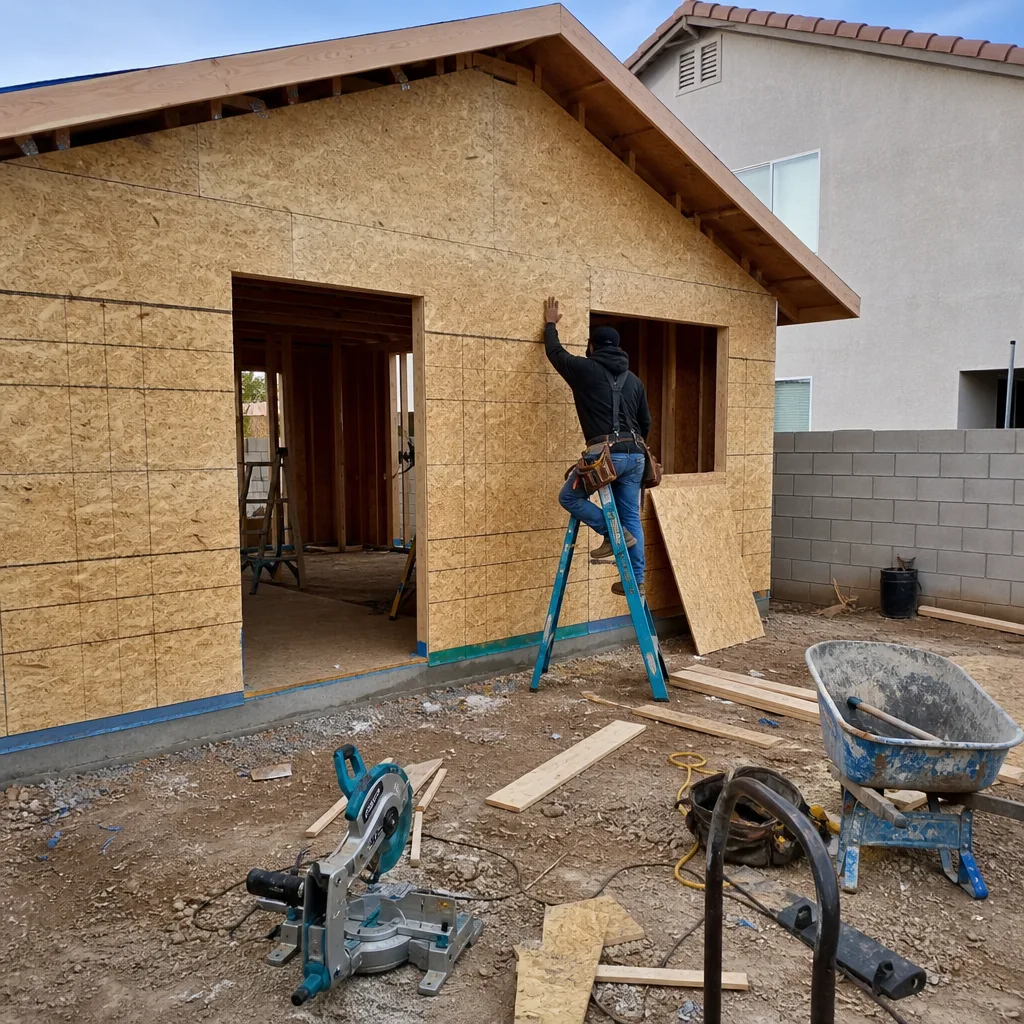
ADUs run eight to fourteen months in Enterprise from design to final inspection. That’s a long time to be guessing what’s happening on your property. A real tracking system removes the guessing.
- Live status by phase. Not a group text – a viewable dashboard showing design, permitting, site prep, foundation, framing, MEP rough-in, finish, and final inspection, with the current phase clearly marked.
- Photo updates at phase transitions. Sanity check for any homeowner who works during the day and can’t visit the site.
- Written change orders with pricing. No verbal “we found a problem, it’ll be a few thousand.” A real system flags the issue, prices the fix, and waits for your approval.
- Live arrival windows. Same expectation as a rideshare – a real window, not a “sometime Tuesday.”
- Digital invoices payable by link. Matched to the milestone payment schedule from the contract.
Tracking matters more for ADUs than for a bathroom remodel because ADUs stack design, permitting, site work, new construction, and utility tie-ins across a single project. When you’re building in Enterprise and coordinating a surveyor, the county, and a lender, a real-time view is the difference between confidence and email tag.
Prefab vs. Site-Built ADUs: What Enterprise Homeowners Should Weigh
Two paths exist for building an ADU, and the choice affects cost, timeline, and how much control you have over the final product.
Site-built ADUs are stick-framed on your property by a crew. You get total design freedom, but every decision from foundation to finishes goes through the contractor’s schedule. Expect twelve to eighteen months start to finish in Clark County.
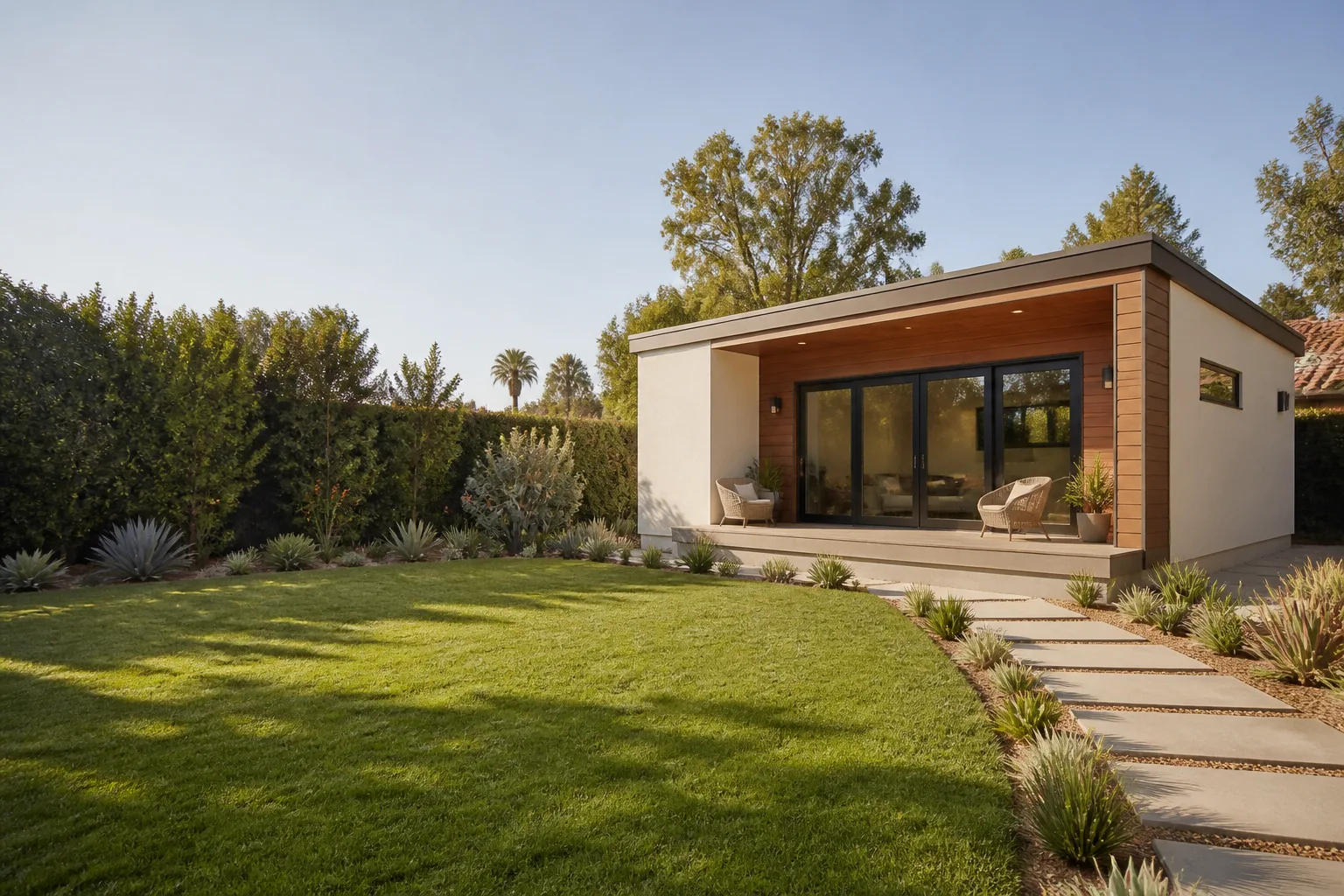
Prefab ADUs are built as modular panels or complete units in a factory, then assembled on your site. Brands like Abodu and Cover have streamlined the process to the point where a homeowner can pick a model, review a fixed price, and get a delivery date. Prefab cuts the build schedule significantly, sometimes to a matter of weeks on site, because the factory work happens in parallel with your site work. Panel durability is a real consideration in the desert: James Hardie cladding, for example, holds up well to Enterprise’s summer heat and UV.
A Tuff Shed ADU sits at the lower-cost, simpler end of the prefab spectrum and works well for a home office or guest space. Higher-end prefab from Abodu or Cover handles full kitchen and bath programming. Whichever path you choose, the four documents from earlier still apply – and prefab quotes should be itemized separately from site work, permits, and utility tie-ins so you can compare them honestly.
We’ve seen the prefab-versus-site-built question decide project success more often than any finish upgrade, which is why our ADU builders in Enterprise walk homeowners through both options before quoting a single dollar.
Enterprise Site Conditions That Affect Your ADU Budget
Enterprise sits in the Mojave, and the local climate and soil change what an ADU actually costs to build.
- Caliche. Much of the Clark County valley floor has a layer of calcium carbonate-cemented soil that slows excavation. Foundation costs on Enterprise lots sometimes come in higher than a homeowner expects because trenching through caliche takes specialized equipment and time.
- Summer heat. Concrete pours and roofing work get scheduled around dawn in June, July, and August. That’s a scheduling reality, not a price hike, but it extends project timelines if not planned for.
- Wind and dust. Spring and fall bring wind events that affect exterior stucco and paint schedules. James Hardie fiber cement siding performs well in these conditions and is a smart spec for an Enterprise build.
- Utility tie-ins. Service panel capacity varies by street, especially in older Enterprise neighborhoods. Have the panel inspected during design, not after framing.
- Rear-yard setbacks. Enterprise lots vary in depth. Before you commit to a footprint, confirm the rear-yard and side-yard setback the zoning allows, or your dream ADU becomes a redesigned one.
None of this is exotic. It just needs to be quoted on the front end, not discovered mid-project. Homeowners scoping out an ADU often realize they also want more room in the main house – that’s a different job, better handled by a home addition contractor in Enterprise who knows the difference between an addition and an ADU.
What a Realistic ADU Timeline Looks Like
Here’s the honest version. An ADU in Enterprise runs eight to fourteen months for a site-built project, and often faster for prefab once the site work is done.
- Design and site plan (4-8 weeks). Surveyor, designer, lot verification, and preliminary site plan.
- Permit application and review (8-16 weeks). Varies with Clark County caseload and project complexity. Ask for the number of permits the contractor has pulled for ADUs specifically – if they fumble this question, they don’t pull many.
- Site prep and foundation (2-4 weeks). Excavation, utilities stubbed, slab or stem wall poured and inspected.
- Framing and rough-in (4-6 weeks). Walls up, roof on, MEP roughed in and inspected.
- Finishes (4-6 weeks). Drywall, paint, flooring, cabinets, fixtures, final inspection.
The biggest timeline variable is permit review. Anyone who quotes you “six weeks, all-in” without looking at your lot’s zoning is guessing. A contractor who asks questions about your lot before giving a timeline is the one to trust. If you want room rather than a standalone structure, our room addition services in Enterprise cover the connected-space side of the family.
Common Mistakes to Avoid
- Hiring on a verbal estimate. The single most common complaint path in Nevada. No written scope, no signature.
- Assuming the contractor handles the panel upgrade. Confirm it in writing. Panel capacity surprises are the number one ADU change order in Clark County.
- Paying a large deposit up front. Milestone-based schedules exist for a reason. Any contractor demanding more than a modest mobilization payment before a single inspection is a risk.
- Skipping the lien waiver conversation. Subcontractors can file liens against your home even if you paid the general contractor. Written lien waivers at each payment close that loop.
- Trusting a “standard setback” answer. Setbacks depend on zoning and lot size in Enterprise. Verify the specific numbers before the design is fixed.
- Choosing the cheapest bid without checking exclusions. Compare itemized bids against the same scope sheet, or the price comparison is meaningless.
- Accepting a “we’ll start Monday” without a permit. Unpermitted ADUs create real financing and resale problems. Confirm the permit is issued before demolition day.
When to Call a Professional
Call a professional ADU contractor in Enterprise the moment you’re considering a detached unit, a garage conversion, or a rear-yard structure – before you buy plans online or talk to a surveyor. Pre-design is when the right contractor saves the most money, because that’s when setbacks, utility capacity, and site conditions get priced instead of discovered. Call us if you’re planning a JADU (junior ADU, the smaller attached version) and need to know whether your main house can carry a second kitchen. Call us if you’ve already gotten bids and they’re 30% apart and you can’t tell why. Call us if you’re inheriting a half-finished ADU project from another contractor and need an honest scope review before you sink another dollar into it. Benson ADU Builders Enterprise offers free estimates in Enterprise – call (844) 980-0541 to schedule yours.
Frequently Asked Questions
Detached ADUs in Enterprise typically run $180,000 to $350,000 for a fully finished unit, depending on size, site conditions, and finish level. Attached JADUs and garage conversions often land in the $95,000 to $180,000 range. Prefab options from brands like Abodu and Cover can come in below a comparable site-built unit once scheduled construction time is factored in. Call (844) 980-0541 for an exact quote – estimates are free.
Yes. Every ADU in Clark County requires a building permit and cross-checks the contractor’s Nevada State Contractors Board license before the permit issues. Unpermitted ADUs create financing, resale, and insurance problems that far outweigh the cost of doing it right the first time. Call (844) 980-0541 to talk through the permit path on your lot.
It shouldn’t, if the original bid itemized site conditions, panel capacity, and finishes properly. Real changes happen for two reasons: something was excluded from the original scope, or site conditions turned out differently than expected. A written price before work starts – with a change-order process that prices any variation before you approve it – keeps the surprises out of the final invoice. Call (844) 980-0541 for a written quote.
Yes, permitting is part of every ADU project. That includes the site plan, the building permit application, and the utility and inspection coordination once work begins. Ask any contractor you interview how many ADU permits they’ve pulled – the answer tells you a lot about their actual specialization. Call (844) 980-0541 to review your project’s permit path.
Eight to fourteen months is realistic for a site-built ADU, with permit review eating the largest chunk. Prefab projects can compress significantly because factory construction happens in parallel with site work. Anyone promising a fixed, aggressive timeline before seeing your lot and zoning is guessing. Call (844) 980-0541 to get a realistic timeline for your property.
Ask for the four documents: written scope, itemized price, milestone payment schedule, and lien waiver process. Then ask for their NSCB license number and classification, the number of ADU permits they’ve pulled, and what their change-order process looks like in writing. Any hesitation on those items is a signal. Call (844) 980-0541 to see what our written quote and guarantee look like up front.
The Bottom Line
Hiring an ADU contractor in Enterprise comes down to paperwork, not personality. The four documents – written scope, itemized price, milestone payment schedule, and lien waiver process – are what separate a real specialist from a verbal-estimate outfit. Verify the license on the Nevada State Contractors Board website, ask the ADU-specific questions, and compare itemized bids against identical scopes. The lowest number on page one is usually the highest number on the final invoice. Our Benson ADU Builders Enterprise home page is a good next stop if you want to see how we put every project in writing before a shovel turns.
Benson ADU Builders Enterprise builds with brands homeowners can research independently – Abodu, Cover, Tuff Shed, and James Hardie among them – and backs every project with a 365-Day Done Right Promise. Every project gets a written price before any work starts, a written guarantee stamped on the contract, and background-checked, uniformed technicians on site. Our technicians bring up to 20 years of experience to each build. Call (844) 980-0541 for a free estimate and a written quote on your Enterprise ADU project.
Written by the team at Benson ADU Builders Enterprise.