Last updated November 18, 2026
DIY vs Professional ADU Builders: What’s Safe to Do Yourself
In Nevada, an owner-builder can pull a residential permit without holding a contractor’s license. That’s the law, and it’s true. But Clark County’s rules for accessory dwelling units, or ADUs, add a layer most YouTube tutorials skip right over: the moment you self-permit, you take on the liability, the inspection risk, and a resale disclosure that follows the property, not just the project. We’ve watched homeowners in Enterprise save a few thousand on framing labor and lose far more on a failed inspection and a torn-out wall. This guide draws the line clearly: what you can legally and safely do yourself, what voids your permit if you touch it, and how prefab systems from brands like Abodu and Cover change the math entirely.
Quick Answer
Safe DIY tasks on an ADU are limited to work outside inspected systems: finish painting, landscaping, non-structural interior trim, and appliance installation that plugs into existing, permitted connections. Electrical panel work, gas line connections, and structural framing are tasks where self-work can void your permit, create uninsurable liability, and force tear-out. For anything behind a wall or on an inspected system, hire a licensed professional.
Table of Contents
- What Nevada’s owner-builder permit law actually lets you do
- The hard no-DIY list: electrical, gas, and structural framing
- Legitimate DIY tasks that save real money in Enterprise
- How prefab ADU systems shift the DIY equation
- The hidden cost of DIY mistakes in permitted work
- What Clark County inspectors actually look at
- A simple framework for deciding what to keep and what to hand off
What Nevada’s owner-builder permit law actually lets you do
Nevada allows a homeowner to act as their own “owner-builder” on a residential project, meaning you can apply for and hold the building permit on a property you own and will occupy. What that means in plain English: the permit is in your name, the inspections answer to you, and the legal responsibility for code compliance sits squarely on your shoulders instead of a licensed contractor’s.
Here’s the part most people don’t hear until too late. When you self-permit, you’re also signing up for:
- Full liability for defects. If a subcontracted trade installs something wrong and you signed as owner-builder, the county comes back to you, not to the sub.
- Resale disclosure. Nevada requires disclosure of owner-builder work when you sell. Buyers and their agents treat an owner-built ADU as higher-risk, and lenders sometimes do too. That can cost you at the negotiation table.
- No warranty safety net. A licensed contractor carries insurance and, at Benson, a written 365-Day Done Right Promise. An owner-builder carries it personally, out of pocket, with no backstop.
So the question isn’t “can I pull my own permit?” It’s “do I want to own everything downstream of that signature?” In Enterprise and across Clark County, the honest answer for most homeowners is no on the structural and utility work, yes on the finishes.
The hard no-DIY list: electrical, gas, and structural framing
Some tasks aren’t just hard. They create liability you can’t insure around and permits that won’t pass. We tell every homeowner these three are off the table for self-work, full stop.
- Electrical panel work. Adding an ADU means load calculations, possibly a panel upgrade, and a dedicated service. Touching a live panel is a genuine electrocution and fire risk. This is work for a licensed electrician, and the county will want to see their sign-off.
- Gas line connections. If your ADU runs a gas water heater, range, or dryer, the gas rough-in and final connection require pressure testing and a licensed plumber or gas fitter. A leaky amateur connection is how houses explode. No tutorial fixes that risk.
- Structural framing and shear. Framing that carries load, shear walls, hold-downs, and roof connections get inspected at multiple stages. If an inspector finds unpermitted or non-compliant framing, the fix is often tear-out, not patch. In Enterprise’s wind and heat swings, structural connections matter more than they look.
We say this as a company that builds these units every day: a real expert flags the danger rather than selling you a shortcut. Structural, electrical, and gas work isn’t a test of how handy you are. It’s a line where amateur work becomes uninsurable liability.
Legitimate DIY tasks that save real money in Enterprise
Now the good news. Plenty of ADU scope is finish work that never touches an inspected system. These are tasks you can genuinely take on yourself and keep the savings.
- Finish painting. Interior and exterior paint, once the drywall is signed off, is yours. Enterprise’s dry climate means exterior paint cures fast but takes a beating from sun, so a quality James Hardie cladding system underneath pays off when you’re maintaining it.
- Landscaping and hardscape. Paths, gravel, drought-tolerant planting, and fencing around the ADU. Desert landscaping in Enterprise is a legit place to save, and it doesn’t touch your permit.
- Non-structural interior trim. Baseboards, casing, shelving, closet systems. Cosmetic carpentry that carries no load and covers no inspected system.
- Appliance installation. Plugging in a fridge, connecting a washer to an already-permitted water and drain hookup, setting a range into a permitted gas or electric connection. The connection itself was inspected; you’re just placing the appliance.
- Fixtures and finishes. Swapping a light fixture on an existing circuit, hanging blinds, installing a pre-fab vanity top. Cosmetic swaps, not new wiring or plumbing runs.
The rule of thumb: if the task is behind drywall, carries a load, or connects to gas or a panel, it’s not DIY. If it’s a surface, a finish, or a finish-level install, it’s fair game.
How prefab ADU systems shift the DIY equation
Prefab changes the calculation in a way most DIY guides ignore. When you build with a factory-built unit, a large share of the structural and finish labor happens in a controlled plant, not your backyard. That means fewer on-site trades and fewer places for a self-managed project to go wrong.
Here’s how that plays out with the brands we build with:
- Boxabl delivers a finished, folding unit that arrives largely complete, so on-site structural framing labor drops sharply. You’re mostly managing site prep and utility connections.
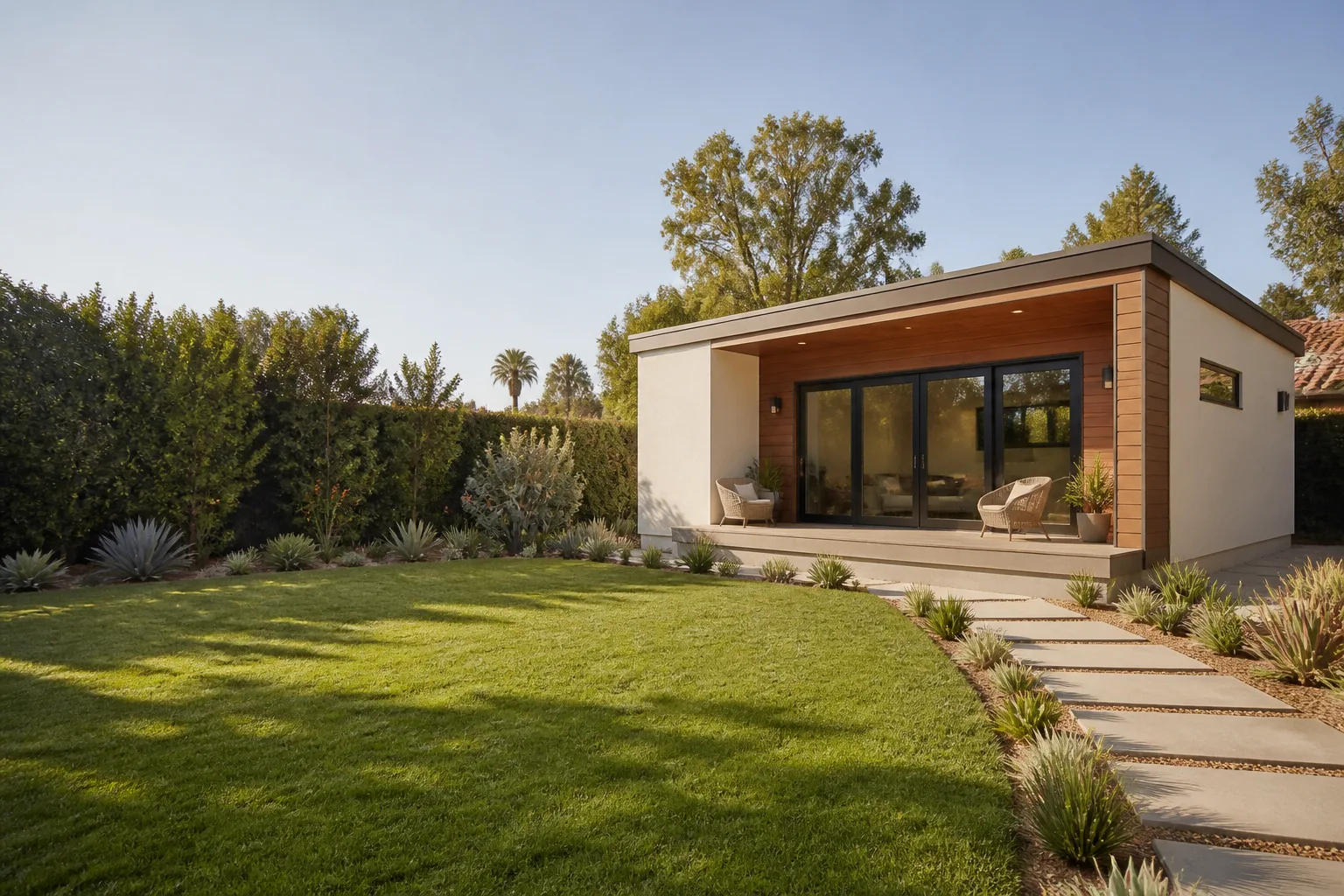
- Abodu and Cover bring panelized and precision-built systems where the shell, envelope, and finishes are done in-factory, meaning the inspected on-site work concentrates on foundation and utility hookups.
- Tuff Shed structures can serve as a shell for certain ADU configurations, again shifting the labor to site prep and connections.
The key point: prefab reduces the trade labor you might be tempted to DIY, but it does not remove the licensed utility hookups. You still need a licensed electrician for the service connection and a licensed plumber or gas fitter for water, sewer, and gas. Prefab shrinks the DIY temptation, it doesn’t eliminate the no-DIY list. That’s a big reason prefab is such a strong fit for the Enterprise climate and lot sizes: factory precision holds up better to desert temperature swings than field-built framing assembled by whoever’s available.
The hidden cost of DIY mistakes in permitted work
The DIY savings math looks great on paper and falls apart at the inspection counter. When permitted work fails, the cost isn’t just the fix. It’s a stack of compounding fees and delays.
What a failed inspection actually costs:
- Re-inspection fees. Counties charge for each return visit. Fail twice or three times and it adds up fast.
- Tear-out requirements. Non-compliant framing or rough-in behind drywall often has to be opened up and redone, which means new drywall, new paint, and lost time on top of the original mistake.
- Schedule delays. Every failed inspection pushes the next trade back. A two-week slip on rough-in can snowball into a month or more on the whole project, and holding costs don’t pause.
- Permit expiration. Permits have time limits. A DIY project that drags past them means renewal fees and sometimes a fresh review.
- Resale risk. Undisclosed or non-compliant owner-builder work is a disclosure problem at sale, and buyers price that risk in.
In our experience in Enterprise, the savings from DIY framing or rough-in almost always get eaten by the re-inspection and tear-out cycle. The tasks that actually pay off are the finish ones we listed earlier, because they don’t touch inspected systems at all.
What Clark County inspectors actually look at
Knowing what gets inspected tells you exactly where DIY is off-limits. Inspectors review work at defined stages, and each stage is a gate your project has to pass before the next trade moves in.
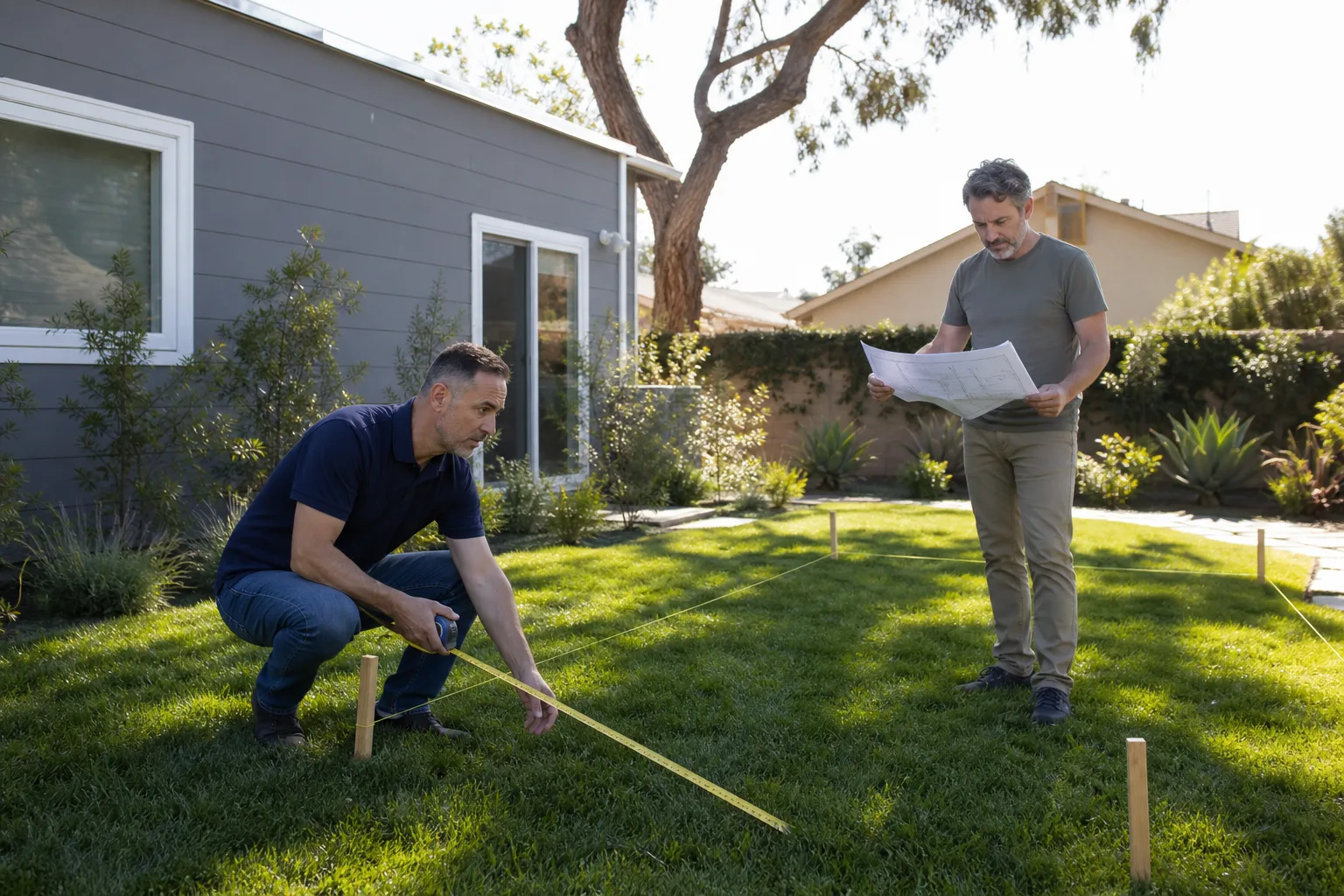
- Foundation and site. Setbacks, footing, and anchoring. Setbacks are the required distances from property lines, and Clark County enforces them strictly for ADUs.
- Framing and shear. Load-bearing members, shear walls, hold-downs, and roof connections, inspected before drywall goes up.
- Rough-in: electrical, plumbing, gas. Wiring in the walls, drain and supply lines, and gas lines under pressure test, all before the walls close.
- Insulation and energy. Insulation values and envelope sealing, especially important in Enterprise where the summer heat load is brutal.
- Final. Fixtures, appliances, and a walkthrough that everything matches the approved plan.
Every one of those gates is a place where a DIY shortcut shows up and fails. The finish work we’ve told you to keep lives after the final inspection, which is why it’s safe and why it saves.
A simple framework for deciding what to keep and what to hand off
If you want one decision rule to carry into your project, use this one. For each task in your ADU budget, ask three questions:
- Does it touch an inspected system? Electrical, plumbing, gas, framing, and envelope are inspected. If yes, hand it off.
- Does a mistake create uninsurable liability? Fire, gas leak, structural failure. If yes, hand it off no matter how confident you feel.
- Is it a finish, a surface, or a finish-level install? If yes, it’s safe to keep.
For everything you hand off, you want a written price before work starts, a live person who answers when something changes, and a warranty behind the work. That’s the whole reason we build around The Relay Visibility Guarantee: a written price before any work begins, the 365-Day Done Right Promise stamped on the project, and background-checked, uniformed technicians on the job. Our technicians have up to 20 years of experience, and you can see exactly who’s on site.
As a member of the Relay Home Co. family, Benson ADU Builders Enterprise pairs that transparency with access to the industry’s leading prefab brands, from Boxabl and Abodu to James Hardie cladding, so you’re choosing between verified options rather than a single take-it-or-leave-it build.
Common Mistakes to Avoid
- Self-permitting to save a fee, then self-performing the framing. The permit fee is the small cost; owning structural liability as an owner-builder is the big one.
- Assuming a YouTube tutorial covers Clark County code. ADU rules vary by jurisdiction, and Clark County’s setbacks and inspection stages are specific. What passed in another state may fail here.
- Doing electrical panel work to save the electrician’s labor. A load calculation done wrong is a fire risk and a guaranteed inspection failure.
- Attempting gas connections without a pressure test. A minor leak is a major safety event, and gas rough-in is inspected for a reason.
- DIYing behind drywall to save time. Anything inspected that goes behind drywall is exactly where tear-out is most expensive.
- Forgetting the resale disclosure on owner-builder work. In Enterprise and across Nevada, undisclosed owner-builder work is a sale-day problem you can’t quietly fix.
- Budgeting without a written price. Verbal estimates shift. Get a written price before you start, so scope creep never shows up as a surprise invoice.
When to Call a Professional
Call a professional for anything behind a wall or on an inspected system: electrical, plumbing, gas, structural framing, foundation, and envelope. Call for panel upgrades, gas rough-in, shear walls, and any structural connection. Call when you’re self-permitting and want someone else to carry the liability and the warranty. Call when a prefab unit arrives and still needs licensed utility hookups. And call when the DIY math starts to look too good, because a failed inspection and a tear-out will erase the savings fast. Benson ADU Builders Enterprise offers free estimates in Enterprise, with a written price before any work starts. Call (844) 980-0541. You can also explore our ADU Builders in Enterprise page and our Room Addition Contractor in Enterprise service for related scope.
Frequently Asked Questions
Yes, but only outside inspected systems. Nevada lets an owner-builder pull the permit for a home they own and occupy, but that makes you legally responsible for code compliance, resale disclosure, and defects. Finish painting, landscaping, non-structural trim, and appliance installation are safe DIY territory; electrical, gas, and structural framing are not. Call (844) 980-0541 for an exact quote if you want the inspected work handled.
You risk a fire, electrocution, and a permit that fails inspection. ADU electrical work needs load calculations, often a panel upgrade, and a licensed electrician’s sign-off, and Clark County inspects the rough-in before drywall. Amateur panel work is the single most likely task to void your permit. Get a licensed professional and a written price before work starts.
Largely, yes. Prefab systems from Boxabl, Abodu, and Cover do the shell, envelope, and finishes in a factory, which concentrates site labor on foundation and utility hookups. That shrinks the number of trades you might DIY. It does not remove the licensed electrician and plumber you still need for connections. Call (844) 980-0541 to talk through prefab options and a written estimate.
Expect compounding costs: re-inspection fees per return visit, tear-out and rebuild of the non-compliant work, and schedule delays that push every following trade back. In a permit with an expiration clock, a month of slippage can mean renewal fees and a fresh review. For most Enterprise projects, the savings from DIY rough-in get eaten by that cycle. Get a written price and avoid the guesswork.
Yes. Nevada requires disclosure of owner-builder work at resale, and buyers, agents, and lenders treat it as higher risk. That can cost you at the negotiating table and complicate financing for your buyer. A licensed contractor’s work, with a written guarantee behind it, avoids that disclosure problem entirely. Call (844) 980-0541 to see how our written guarantee protects the value of your project.
Look for a written price before work starts, a warranty you can read, background-checked and uniformed technicians, and a live person who answers the phone. Ask which prefab brands they build with, from Tuff Shed and Abodu to James Hardie cladding, so you can verify quality independently. Then ask for the guarantee in writing. Benson ADU Builders Enterprise publishes the 365-Day Done Right Promise on every project. Call (844) 980-0541 for a free estimate.
The Bottom Line
The DIY line on an ADU is clearer than most guides suggest. Keep the finishes: paint, landscaping, trim, appliance placement. Hand off everything inspected: electrical, gas, structural framing, foundation, and envelope. Nevada’s owner-builder law lets you pull your own permit, but it also hands you the liability and a resale disclosure, which is usually a bad trade. Prefab systems from Boxabl, Abodu, and Cover shrink the DIY temptation without eliminating licensed hookups. In Enterprise, the smart play is to save on the finish work and put the inspected work behind a written price and a written warranty.
Ready to draw the line on your project? Call Benson ADU Builders Enterprise at (844) 980-0541 for a free estimate, a written price before any work starts, and options across the leading prefab brands. You can start from our Benson ADU Builders Enterprise home or dig into our Home Addition Contractor in Enterprise service.
Written by the team at Benson ADU Builders Enterprise.